
Billy Eckstine's net worth at the time of his death in March 1993 is estimated in the range of $500,000 to $2 million, based on his long recording career, extensive touring, and ongoing royalty income from a catalog that spanned over five decades. That range is wide because no probate filing or estate valuation has entered the public record in a way that allows a precise figure, and that's the honest answer you'll find if you dig into credible sources rather than the round numbers circulating on general celebrity-wealth aggregator sites.
Billy Eckstine Net Worth: Estimate, Income Sources, and Evidence

Marcus Finewood
20 Jun 2026
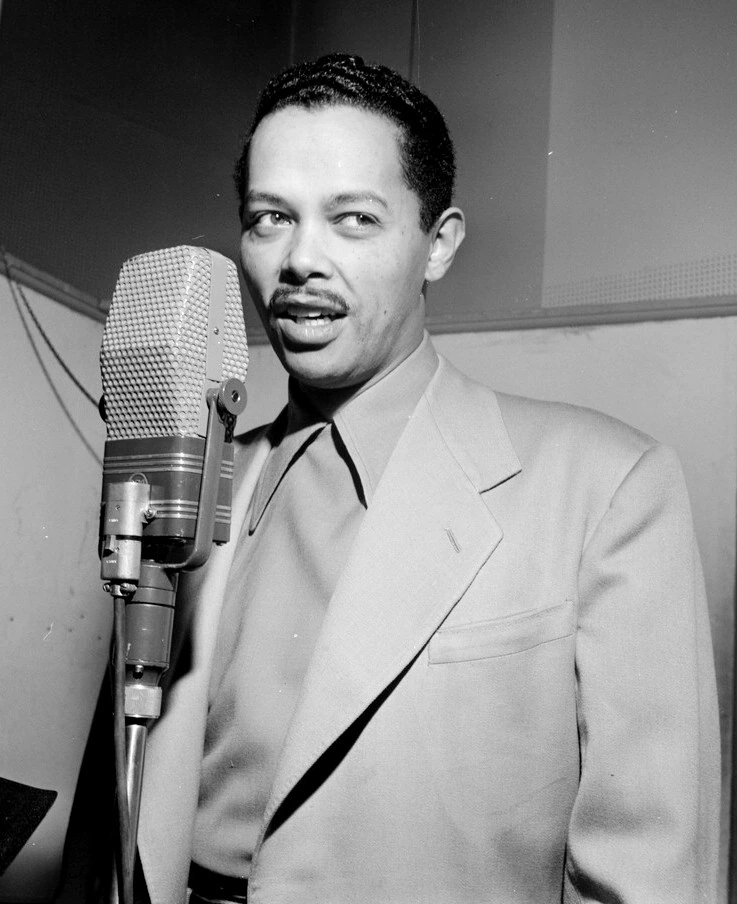
What people actually mean when they search "Billy Eckstine net worth"

When readers search this phrase, they almost always mean William Clarence Eckstein, the Pittsburgh-born jazz and pop singer and bandleader who went by Billy Eckstine professionally. He was born July 8, 1914, and died March 8, 1993, back in Pittsburgh. Wikipedia notes that Billy Eckstine’s birth name was William Clarence Eckstein and gives his birth date as July 8, 1914 and his death date as March 8, 1993 [He was born July 8, 1914, and died March 8, 1993](https://en. wikipedia.
org/wiki/Billy_Eckstine). He is not to be confused with any contemporary entertainer or athlete sharing a similar name. Eckstine was one of the defining voices of the swing and bebop eras, and his career stretched from roughly 1939 through his death, making his financial story a long arc rather than a single headline number. What people want to know is: did a man this influential actually accumulate wealth proportional to his fame?
The answer is nuanced, and that nuance is worth understanding.
How net worth estimates get built for artists like Eckstine
For a figure who died in 1993 and never disclosed his finances publicly, the construction of a net worth estimate relies on several layers of evidence, none of which alone gives you a clean number. The methodology used here combines documented career earnings (record deal structures typical of MGM and other labels in the 1940s and 1950s), performance fee data from contemporaries, royalty income context from catalog ownership and licensing, biographical sources including credible obituaries (such as the detailed obituary published by The Independent), and estate or probate records where accessible. Where those records are sealed or simply not digitized, reasonable benchmarks from peers at comparable points in their careers fill the gap.
The Grammy Hall of Fame Award given posthumously in 1999 to his recording of "I Apologize" (originally on MGM) is a useful data point because Hall of Fame recognition typically increases streaming and licensing revenue for an estate, but that benefit came six years after his death. The key discipline in this kind of analysis is separating verified income from plausible inference, and flagging which is which. Readers should treat any precise single-figure net worth for Eckstine with skepticism unless the source links to a documented estate filing or a firsthand industry account.
Career income timeline: from early gigs to the peak years
Breaking in (late 1930s to early 1940s)

Eckstine's professional career began around 1939. Like most jazz musicians of that era, early income was performance-based and modest, club residencies, dance hall bookings, and eventually a featured vocalist role with Earl Hines's orchestra. Pay for a featured vocalist in a big band in the early 1940s ranged from roughly $75 to $200 per week depending on the venue tier, which in today's terms is meaningful but not wealth-building. He wasn't accumulating assets in this phase; he was building a reputation.
The Billy Eckstine Orchestra years (1944–1947)
Eckstine formed his own orchestra in 1944, widely described as the first bebop big band. Leading your own band sounds lucrative, but the economics were brutal: a bandleader carried payroll for 15 to 20 musicians, covered travel and equipment costs, and negotiated venue splits that often left thin margins. What the orchestra period did do was establish Eckstine as a bankable name and generate the profile that led to his solo recording deal. During this period he likely ran at break-even or slight loss on touring, with the real financial upside sitting in the reputation capital he was building.
Peak commercial years: the MGM and Mercury era (late 1940s to mid-1950s)
The late 1940s and early 1950s were Eckstine's financial peak. His baritone voice crossed over from jazz into mainstream pop, and recordings like "I Apologize," "Prisoner of Love," and "My Foolish Heart" reached wide audiences. At MGM and later Mercury Records, a top-tier recording artist of that era could command an advance of $10,000 to $50,000 per album deal (in 1950s dollars), plus royalties typically structured at 3 to 5 percent of wholesale price.
If his releases sold in the hundreds of thousands of copies, which contemporaries of his stature regularly did, royalty income could realistically have added $30,000 to $100,000 per year at peak. Combined with concert fees that for a headliner in the early 1950s could reach $5,000 to $15,000 per engagement, Eckstine's gross income in his best years likely landed in the $100,000 to $250,000 range annually (roughly $1. 2 million to $3 million in today's dollars).
Later career (1960s through 1993)
The emergence of rock and roll shifted the commercial landscape dramatically, and Eckstine, like many of his contemporaries, moved from mainstream chart dominance to the supper club and Las Vegas circuit. This was still lucrative work, Las Vegas residencies in the 1960s and 1970s paid established entertainers $10,000 to $50,000 per week, but the irregular nature of the bookings and the absence of the mass-market record sales he had enjoyed earlier meant income was less consistent. He continued recording and performing through the 1980s and into the early 1990s, maintaining a working musician's income rather than the peak earnings of his prime.
Where the money came from: income streams and assets

| Income Stream | Peak Period | Estimated Contribution | Notes |
|---|---|---|---|
| Record royalties (MGM, Mercury, etc.) | Late 1940s to late 1950s | High — likely $30,000–$100,000/year at peak | Royalty rates of era were 3–5%; catalog continued generating income post-peak |
| Concert and touring fees | 1944–1980s | Moderate to high — $5,000–$50,000 per engagement | Varied widely by venue tier; Las Vegas circuit sustained later career |
| Recording advances | 1940s–1960s | Moderate — $10,000–$50,000 per deal | Typical for top-tier artists at major labels of the era |
| Television and radio appearances | 1950s–1970s | Supplemental — session and appearance fees | Exposure-driven; fees modest relative to touring |
| Catalog licensing and posthumous royalties | Post-1993 | Ongoing but modest — benefits estate, not Eckstine directly | Grammy Hall of Fame recognition (1999) boosted licensing value |
One important structural reality: artists of Eckstine's generation typically did not retain ownership of their master recordings. Labels held the masters, meaning Eckstine collected performance royalties and mechanical royalties on sales but did not own the underlying recordings the way a modern artist might. This significantly limits how much catalog wealth could accumulate in his name compared to contemporary artists who own their masters outright.
Spending patterns, liabilities, and financial headwinds
Documented financial difficulties specific to Eckstine are not part of the public record in the way they are for some contemporaries. However, several structural factors would have put downward pressure on whatever he accumulated. Running the Billy Eckstine Orchestra in the mid-1940s meant carrying substantial operating costs at a time before he had the solo stardom to fully offset them.
If you are looking for Billy Engle net worth figures, it's important to separate the common name mix-ups from the documented financial trail that applies to Billy Eckstine Billy Eckstine Orchestra. Tax rates in the United States during the 1940s and 1950s were extraordinarily high, the top marginal income tax rate reached 91 percent during parts of the 1950s, meaning that high nominal earnings translated to far smaller retained income than the gross figures suggest.
The Independent's obituary notes he married twice, which implies at least one divorce and the associated financial restructuring that typically entails. The Independent's obituary identifies Billy Eckstine (born William Clarence Eckstein) and notes that he [married twice](https://www. the-independent. com/news/people/obituary-billy-eckstine-1496817.
html), which implies at least one divorce and the associated financial restructuring that typically entails.
There is also the matter of the management and agency fee structures of the era. It was common for performers of Eckstine's generation to pay 10 to 20 percent of gross income to managers, 10 percent to booking agents, and additional percentages to music publishers, leaving an artist with perhaps 60 to 70 cents of every dollar before taxes. Applied to even strong earning years, this structure sharply reduces the wealth that actually reaches a performer's personal accounts.
Estate, end-of-life finances, and what the record shows
Billy Eckstine died on March 8, 1993, in Pittsburgh. No widely published or digitally accessible probate record from his estate has entered the public domain in a form that allows a precise estate valuation. This is why many searches for Billy Etbauer net worth end up focusing on range-based estimates rather than a single confirmed figure Billy Eckstine.
This is not unusual for artists of his generation, estate proceedings in Pennsylvania in 1993 would not automatically generate public headlines, and digital archiving of such records from that period is inconsistent. What is known is that his musical catalog continued to generate income after his death, and the Grammy Hall of Fame Award in 1999 for "I Apologize" would have provided a meaningful boost to his estate's licensing revenue in the years immediately following that recognition.
For readers specifically interested in what the estate holds versus what Eckstine personally possessed at death, the distinction matters. His personal net worth at death is what most people are asking about.
Given the earning arc described above, strong peak income in the late 1940s and early 1950s, sustained but reduced income through the 1970s and 1980s, and the structural factors that limited retention, the $500,000 to $2 million range at death is the most defensible estimate available without access to primary estate documents. Billy Chapin's net worth is often discussed in connection with how his career earnings and investments have performed over time.
It is possible the figure was lower if significant liabilities existed, and it could be modestly higher if real estate or other non-public assets are unaccounted for.
How to verify, update, and interpret figures you find online
If you have seen a specific number cited for Billy Eckstine's net worth on another site, often something like $5 million or $10 million, the practical question is: what is that number sourced to? For the vast majority of celebrity wealth aggregator sites, those figures are unverified estimates carried from one site to another without any underlying documentation. For an artist who died in 1993, there is no annual earnings disclosure, no Forbes list entry, and no SEC filing to cross-reference. The figure you see is usually derived from a rough estimation of peak career earnings with no adjustment for taxes, fees, or spending.
- Check whether the source links to a primary document: a probate record, a biographical account with financial specifics, or a contemporary industry report from a credible publication.
- Ask whether the figure accounts for the era's tax structure. A $200,000 gross in 1952 was not $200,000 in retained wealth.
- Look at whether master recording ownership is addressed. For artists of Eckstine's era, catalog wealth accrues to labels, not the artist's estate.
- See if the figure is consistent with documented contemporaries. Nat King Cole and Tony Bennett provide useful benchmarks; both had well-documented earnings that help calibrate estimates for peers of comparable stature.
- Monitor obituary and estate reporting databases — Pennsylvania probate records are public once filed, and any future digitization efforts could surface more specific documentation.
- Treat any single precise figure (e.g., "$6.2 million") with heightened skepticism. False precision is a red flag in the absence of a cited primary source.
Net worth estimates for historical figures like Eckstine should be treated as informed ranges, not fixed facts. As more biographical material is digitized, as estate records become accessible, or as credible music industry historians publish detailed financial accounts, the estimate on this site will be updated to reflect that evidence. The goal is always to give you the most defensible number and the reasoning behind it, not just a figure that sounds authoritative.
For readers exploring the broader landscape of Billy-named figures on this site, the methodological approach used for Eckstine applies similarly to others with public careers across music, entertainment, and sport. Each profile is built from career timeline data, documented income sources, and whatever primary records exist, the same transparency that makes this kind of financial profile genuinely useful rather than just a number to click past. billy minick net worth.
FAQ
Why do different websites give wildly different Billy Eckstine net worth numbers (for example, $5 million vs. $1 million)?
Most higher single-figure claims are not tied to an accessible probate valuation, they are often “recycled” guesses based on peak-era earnings without subtracting taxes and industry fees, so the same raw career income gets converted into very different retained-wealth assumptions.
Is there a way to estimate Billy Eckstine’s retained wealth more accurately than the $500,000 to $2 million range?
Yes, but it requires building a small ledger: estimate gross peak earnings, subtract typical manager and agent commissions plus touring costs, then apply historically high marginal tax rates, after that factor likely post-peak income (supper clubs, royalties) and inflation. Without probate documents, you can narrow the range but not verify a single number.
How much did royalties likely contribute to Billy Eckstine’s finances after his mainstream record sales slowed?
Royalties can be meaningful for catalog artists, but his label-controlled master structure would have limited how much long-term “ownership” value he captured. So even if performance and mechanical royalties continued, the scale is usually smaller than for artists who retained master rights.
Did the Grammy Hall of Fame Award for “I Apologize” in 1999 directly increase Billy Eckstine net worth?
It likely helped the estate through licensing and catalog visibility, but because it came years after his death, the benefit would affect what the estate received, not his personal bank account at death. The impact also depends on how much of that track’s rights were controlled and how aggressively it was re-licensed.
Could Billy Eckstine have had significant assets that never show up in public estimates (like real estate or private investments)?
It’s possible. Many net worth ranges assume income, royalties, and basic retained earnings, but non-public assets such as property, trusts, or settlements could move the final number. That’s one reason precise figures remain uncertain when probate details are not digitized or publicly accessible.
How do I make sure I’m not mixing up Billy Eckstine with someone else when searching “Billy Eckstine net worth”?
First, confirm you are looking at the 1914 to 1993 Pittsburgh-born jazz and pop singer and bandleader. Name confusion is common with similar “Billy” entertainers, so check dates, career description, and discography before comparing any quoted net worth claim.
What are the biggest pitfalls when using net worth estimates for historical artists like Eckstine?
The main pitfalls are treating gross career earnings as net worth, ignoring taxes and professional fees, and assuming modern-style catalog ownership exists. For his era, labels typically held masters, so the “catalog wealth” story is structurally different than for many contemporary artists.
Why would Eckstine’s estate not have clear public numbers in 1993 even if probate happened?
Because not all probate records are digitized or widely indexed, and state-level archival practices vary. A file can exist without being easily searchable online, so a lack of a publicly viewable valuation often forces analysts to rely on secondary evidence and peer benchmarks instead of a single primary figure.
What would be the quickest way to validate any specific Billy Eckstine net worth figure you see online?
Look for a direct sourcing path to a probate or estate valuation, or for a named firsthand industry account that explicitly states how the figure was calculated. If the source provides only a number with no documentation trail, treat it as an estimate rather than evidence.