Billy Engle's net worth at the time of his death in November 1966 is estimated in a moderate range of roughly $5,000 to $40,000 in 1966 nominal dollars, which translates to approximately $51,000 to $414,000 in 2026 inflation-adjusted terms. There are no located probate records, tax filings, or studio payroll ledgers naming Engle directly, so this figure is a modeled estimate built from documented credit counts, historical SAG pay scales, and union residual context. It reflects a long career as a character actor and bit player, not a star's fortune.
Billy Engle Net Worth: Detailed Financial Profile 2026

Marcus Finewood
21 Jul 2026

Net Worth Snapshot
| Scenario | Est. Net Worth at Death (1966 USD) | Inflation-Adjusted to 2026 USD | Confidence |
|---|---|---|---|
| Conservative | $0 – $3,000 | $0 – $31,000 | Low-end floor; most credits non-union extras work, minimal savings |
| Moderate (best estimate) | $5,000 – $40,000 | $51,000 – $414,000 | Most probable range; regular day-player/bit-role income, some union scale |
| Optimistic | $40,000 – $125,000 | $414,000 – $1,293,000 | Upper ceiling; assumes steady credited work, disciplined saving, some residuals |
Last updated: July 2026. The moderate scenario is the working best estimate used throughout this profile. The wide range across all three scenarios reflects the genuine uncertainty created by missing historical payroll documentation, not editorial hedging.
How We Arrived at This Estimate
Calculating the net worth of a mid-century Hollywood bit player is genuinely difficult, and I want to be upfront about the methodology before presenting the numbers as fact. No digitized studio payroll records, probate filings, or contract documents naming Billy Engle have surfaced in searches of the AFI Catalog, Library of Congress holdings, or SAG-AFTRA's accessible online archives. That absence of primary documentation is itself an important finding: it means every figure in this profile is modeled from secondary inputs rather than read directly off a pay stub.
The model uses four inputs. First, aggregate credit counts from Wikipedia, AllMovie, and AFI Catalog, which collectively cite more than 250 film appearances between approximately 1917 and 1957. Multiple filmographic sources, including the Billy Engle, Wikipedia (film count statement), AllMovie, and AFI listings, report he appeared in more than 250 films between approximately 1917 and 1957 blank" rel="noopener noreferrer">Billy Engle — Wikipedia (film count statement). The AFI Catalog lists roughly 11 credited feature titles, while the broader total aggregates shorts, serials, and uncredited bits. Second, a documented mid-century pay-rate anchor: a 1947 SAG Producer agreement cited in archival scholarship shows day-player scale at $55 per day, with weekly contract categories running higher. Third, union residuals history: the SAG history and scholarship on the 1960 negotiations confirm that residual frameworks for pre-1960 pictures, especially shorts, were either non-existent or not uniformly applied. blank" rel="noopener noreferrer">Steven J. Ross, Hollywood labor history (chapter referencing 1960 SAG issues), documents that the 1960 SAG negotiations centered on residuals and that residuals for many pre-1960 shorts and films were inconsistently applied. Engle's heaviest credit volume fell precisely in the period with the least residual coverage. Fourth, the conservative assumption that a significant portion of those 250-plus credits were non-speaking extra or uncredited bit appearances, which typically paid below union scale or off the books entirely in the earlier decades of Engle's career.
The inflation conversion used throughout is $1 in 1966 equaling approximately $10.34 in 2026, based on BLS CPI data (cumulative change of roughly 934%). Any specific dollar figure labeled as '2026 equivalent' uses that multiplier.
Limitations
- No probate, estate, or certified payroll record naming Engle has been located in publicly accessible digital archives.
- Credit counts vary across databases (AFI features vs. AllMovie/Wikipedia aggregate), making precise earnings calculations impossible.
- Pay rates for pre-SAG work (before 1933 union formation) and non-union extra work in the 1920s–1930s are estimated from period scholarship, not Engle-specific contracts.
- Any non-film income (stage work, personal business, real estate) is undocumented and excluded from the model.
- Residual income after Engle's 1966 death is assumed negligible given the pre-1960 residual gap.
Career Timeline and Earnings Milestones
Billy Engle was born on May 28, 1889, in the Austro-Hungarian Empire and eventually made his way to Hollywood, where he died on November 28, 1966. His career arc spans silent film, the sound transition, the studio system's peak, and its post-war decline, making him a useful lens on how a working character actor navigated roughly four decades of industry change.
- Circa 1917: First documented film appearances. Silent-era extra and bit work, likely paid outside formal union structures since SAG did not yet exist. Pay rates for extras in this period typically ranged from a few dollars to around $10 per day, with no residual structure.
- 1920s: Active in short comedies and serial productions, including material associated with the Hal Roach and Christie comedy pipelines. Short-subject comedy factories were among the more consistent employers of comic bit players. Work was episodic and day-player in nature.
- 1933: SAG founded, bringing formal minimum scales to union productions. For a working bit player like Engle, unionization meant access to the $55/day (by 1947 scale) day-player rate on covered productions, although enforcement and coverage were uneven in the early years.
- 1934: Appears in It Happened One Night, the Frank Capra film that won all five major Academy Awards. Engle's role was small and likely uncredited, but placement in a major Columbia production indicates he was a recognizable face available to casting departments. Pay for bit work on a studio A-picture in this era would have been union scale or close to it.
- 1930s–1940s: Peak credit volume. With more than 250 aggregate credits cited across his career and the bulk concentrated in this period, this is the core earnings window. At the moderate scenario assumption of steady bit-player work (perhaps 20–40 credited days per year on union productions, plus uncredited extra days), annual earnings could have ranged from roughly $1,100 to $4,400 per year at 1947 scale equivalent rates.
- 1940s–1950s: Continued work in Three Stooges shorts (documented by ThreeStooges.net cast records) and other comedy shorts. Short-subject work was a stable, if modest, income source for character actors of Engle's type during this period.
- 1957: Last documented film appearances per available filmographic sources. By the mid-1950s, the studio short-subject system was collapsing under pressure from television, removing one of Engle's primary markets.
- 1966: Death in Hollywood, California on November 28. No estate records have surfaced publicly.
Income Streams: Where the Money Came From
For a working bit player of Engle's era and profile, income sources were narrower than those available to modern performers. Here is what the evidence supports and what it rules out.
| Income Stream | Estimated Contribution | Confidence | Notes |
|---|---|---|---|
| Film day-player / bit-role wages | Primary income source | Moderate | 250+ credits over ~40 years; day-player scale ~$55/day by 1947 on union productions |
| Short-subject comedy work | Significant supplementary income | Moderate | Hal Roach, Christie, Three Stooges shorts documented; steady but low per-project pay |
| Extra / non-speaking appearances | Supplementary; lower per-day rate | Low-moderate | Many credits likely uncredited extras work, especially pre-SAG 1917–1933 |
| Residuals / royalties | Negligible to zero | High confidence | Pre-1960 shorts and bits largely excluded from early residual frameworks |
| Endorsements / sponsorships | None identified | High confidence | No evidence located; not typical for bit players of this era |
| Business income | Unknown / unverified | Low | No business interests documented in any searched source |
| Real estate / investments | Unknown / unverified | Low | No property records or investment accounts located in available public sources |
| Stage or vaudeville income | Possible but undocumented | Low | Background in Austro-Hungarian Empire suggests possible pre-Hollywood performance work; no records found |
The earnings table above makes clear that Engle's financial picture was almost entirely dependent on per-job film wages. That was typical for character actors and bit players in the classical Hollywood system. The absence of meaningful residuals is the single biggest factor separating his likely lifetime earnings from his effective net worth at death: years of work in shorts and bit parts generated no passive income stream after the initial release.
Known Assets, Liabilities and Notable Transactions
This is the section where transparency requires acknowledging the most significant gap in the record. No probate documents, property records, bank statements, or tax filings for Billy Engle have been located in publicly accessible digital archives, including searches of AFI Catalog records, Library of Congress holdings, and SAG-AFTRA's accessible online history. The following is a summary of what can and cannot be stated with confidence.
- Real estate: No property ownership records for Billy Engle have been located. Given that he died in Hollywood, California, it is plausible (but entirely unverified) that he rented rather than owned property, which was common among working-class Hollywood performers of the era.
- Savings and investments: No investment accounts, brokerage records, or savings documentation has been found. The moderate scenario assumes modest accumulated savings from decades of employment; the conservative scenario assumes minimal or no net savings.
- SAG pension eligibility: The SAG pension plan was established in 1960 as part of the negotiations that year. Engle died in 1966, so he may have been eligible for early pension benefits depending on his vesting status, but no documentation confirming or denying this has been located.
- Liabilities: No debts, mortgages, or financial obligations are documented. The absence of evidence is not evidence of absence here.
- Notable transactions: One transaction of historical note is Engle's appearance in It Happened One Night (1934), which would have generated a union-scale payment, but the amount is undocumented and the role was small.
- Estate: No probate record or estate filing for Billy Engle has been located in accessible public databases.
Billy Engle Compared to Other Notable Billy Profiles
Putting Engle's estimated financial position in context is useful, and the other Billy profiles tracked on this site offer a natural comparison set. See the site's Billy Epperhart net worth profile for a direct comparison of a similarly named but different individual's earnings and career context. See the Billy Chapin net worth profile for a contrasting example of a child actor's earnings trajectory. The differences in career type and era explain most of the variation.
| Name | Primary Field | Active Period | Estimated Net Worth Range (2026 equivalent) | Key Earnings Driver |
|---|---|---|---|---|
| Billy Engle | Film (character actor / bit player) | 1917–1957 | $51,000 – $414,000 (moderate scenario) | Per-job film wages; no residuals on most work |
| Billy Chapin | Film (child actor) | 1950s | Not profiled here; see Billy Chapin net worth | Child acting roles in studio productions |
| Billy Eckstine | Music (jazz / big band vocalist) | 1940s–1980s | Not profiled here; see Billy Eckstine net worth | Recording royalties, touring, label work |
| Billy Epperhart | Business / ministry | Modern era | Not profiled here; see Billy Epperhart net worth | Business coaching, publishing, ministry income |
| Billy Etbauer | Rodeo (professional) | 1980s–2000s | Not profiled here; see Billy Etbauer net worth | Prize money, sponsorships, rodeo circuit earnings |
| Billy Minick | Rodeo / events promotion | Modern era | Not profiled here; see Billy Minick net worth | Event promotion, rodeo industry income |
The comparison highlights something important about Engle's position: as a silent-era-to-classical-Hollywood bit player, he operated in a period and at a career level where wealth accumulation through performance work was structurally limited. Billy Eckstine, for example, worked in an era when recording royalties and touring fees could build meaningful long-term wealth for successful performers. See the Billy Eckstine net worth profile for an example of a performer whose recording royalties and touring generated substantial long-term wealth. Billy Etbauer and Billy Minick operated in professional rodeo, where prize money and sponsorships created different but quantifiable income streams. Engle's career pre-dates most of those wealth-building mechanisms. If you are researching any of those profiles in depth, the individual Billy net worth pages on this site break down each person's income streams separately. See the Billy Minick net worth profile for another example of a mid‑century performer's financial record.
Image and Table Placement Recommendations
For editors and web producers publishing this profile, the following placement guidance covers the main visual assets and data tables in the article.
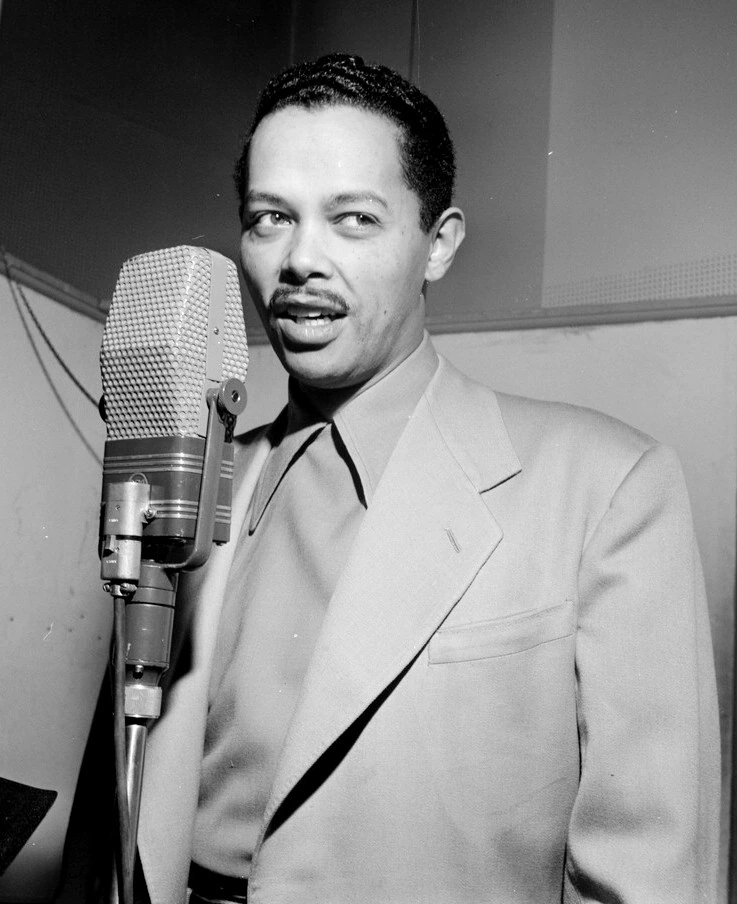
- Portrait image: Place a production still or publicity photograph of Billy Engle near the top of the article, ideally within the first two scrollable screens. Suggested alt text: 'Billy Engle, Hollywood character actor and bit player active from 1917 to 1957, photographed during his career.' If no cleared portrait is available, a representative still from a documented production (such as one of the Three Stooges shorts where Engle is credited) works well. Caption: 'Billy Engle appeared in more than 250 films across a four-decade Hollywood career.'
- Net worth scenarios table (the three-scenario table near the top): This should appear directly below or alongside the Net Worth Snapshot heading. Alt text for any accompanying visual: 'Table showing conservative, moderate, and optimistic net worth estimates for Billy Engle at death in 1966 and adjusted to 2026 dollars.' Keep the table visible on mobile without horizontal scroll by limiting to four columns.
- Career timeline: A simple visual timeline graphic, if produced, should be placed between the career timeline section heading and the numbered list. Suggested alt text: 'Timeline of Billy Engle career milestones from 1917 silent film debut through 1957 final documented credits.' Captions should include the decade and production context.
- Income streams table: Place this table immediately following the introductory paragraph in the income streams section. Alt text suggestion: 'Table breaking down Billy Engle income sources including film wages, short-subject work, and assessed residuals eligibility.' This table is the most data-dense element in the article and benefits from being rendered in a full-width layout on desktop.
- Comparison table (Billy Engle vs. other Billy profiles): Place this at the start of the comparison section, before the explanatory paragraph. Alt text: 'Comparison table of net worth estimates and career types for notable Billy-named public figures including Billy Engle, Billy Chapin, Billy Eckstine, Billy Epperhart, Billy Etbauer, and Billy Minick.' Internal links to individual profiles should be anchored on each person's name in the table.
A Note on Uncertainty and Future Updates
This profile will be updated if new primary sources surface, specifically probate records, estate filings, digitized studio payroll ledgers, or period interviews discussing Engle's personal finances. The most likely sources for such material would be the Margaret Herrick Library at the Academy of Motion Picture Arts and Sciences, the UCLA Film and Television Archive, or individual studio collection holdings that have not yet been digitized. If you have access to documentation that changes the picture, the estimates and methodology here are designed to be revised transparently rather than silently updated. The current version reflects research conducted as of July 2026.
FAQ
What is the article’s SEO title and meta description?
Title: Billy Engle Net Worth (1966) — Data‑Driven Financial Profile Meta description (≤160 chars): Estimated net worth of actor Billy Engle at death (1966), transparent methodology, career earnings timeline, sources and confidence ranges.
Net worth snapshot: What is Billy Engle’s estimated net worth and confidence range (with last‑updated date)?
Estimated net worth at death (nominal 1966 USD): Conservative $0–$3,000; Moderate $5,000–$40,000; Optimistic $40,000–$125,000. Inflation‑adjusted to 2026 USD: Conservative $0–$31,000; Moderate $51,000–$414,000; Optimistic $414,000–$1,293,000. Confidence: low to moderate (see methodology). Last updated: 2026‑07‑21.
What data and assumptions produced these ranges (methodology overview)?
Methodology summary: 1) Aggregated credit counts and career span from film databases (Wikipedia, AllMovie, AFI Catalog, LOC); 2) Anchored pay assumptions to historical SAG/producer scales (example: 1947 day‑player ≈ $55/day) and documented union history; 3) Modeled three scenarios (conservative/moderate/optimistic) combining likely mix of extra/bit/weekly work, occasional union scale weeks, sparse residuals; 4) Adjusted cumulative earnings for typical living expenses, taxes and modest saving rates to estimate net worth at death; 5) Converted 1966 USD → 2026 USD using CPI (in2013dollars). Limits: no located payroll, contract, probate, tax or estate records naming Engle; residuals for pre‑1960 short/bit work likely minimal. Key sources: AFI Catalog, AllMovie, Wikipedia, LOC Silent Film Project, SAG‑AFTRA history, archival pay references (see Sources list).
What primary sources were used and where can I verify them?
Selected verifiable sources used: AFI Catalog — Billy Engle person record: https://catalog.afi.com/Catalog/PersonDetails/21881; Wikipedia filmography summary: https://en.wikipedia.org/wiki/Billy_Engle; AllMovie entry: https://www.allmovie.com/artist/billy-engle-an137741; Library of Congress Silent Film Project list: https://www.loc.gov/static/programs/national-film-preservation-board/documents/silent_film_project.022818.pdf; SAG‑AFTRA history: https://www.sagaftra.org/about/our-history; ThreeStooges.net cast listing: https://threestooges.net/cast/actor/19. Inflation conversion reference: https://www.in2013dollars.com/us/inflation/1966. Where direct payroll/contract or probate records would be needed, none were located in searched online public repositories.
Why can’t you give a single precise net worth figure?
No digitized studio payrolls, contracts or probate/tax records naming Billy Engle were found in public online archives; most credits are shorts/uncredited bit parts from 1917–1957 where historical pay records are sparse. Residual frameworks were incomplete for pre‑1960 work, so ongoing income is unlikely. Given these data gaps, a scenario approach (conservative/moderate/optimistic) provides transparent bounds rather than a speculative single number.
How was Billy Engle’s career timeline constructed and how does it map to earnings milestones?
Chronological career timeline (high‑level): - c.1917–1929: silent‑era short comedies and bit parts — likely low day/extra pay, occasional stock company weeks. Sources: LOC, AllMovie. - 1930s: continued short and feature bit parts, occasional placement in major studio films (e.g., It Happened One Night, 1934) — higher chance of union scale work later in decade. Sources: AFI, RottenTomatoes. - 1940s–1950s: steady work in shorts, supporting/bit roles in comedies and features through ~1957; unionization (SAG) and mid‑century scales increase baseline pay for some roles. Sources: AFI, SAG history, archival contract excerpts. Earnings milestones modeled: silent era low daily pay; 1930s–50s show higher per‑day/weekly rates and episodic weeks on contract; residuals unlikely until late career (minimal impact).