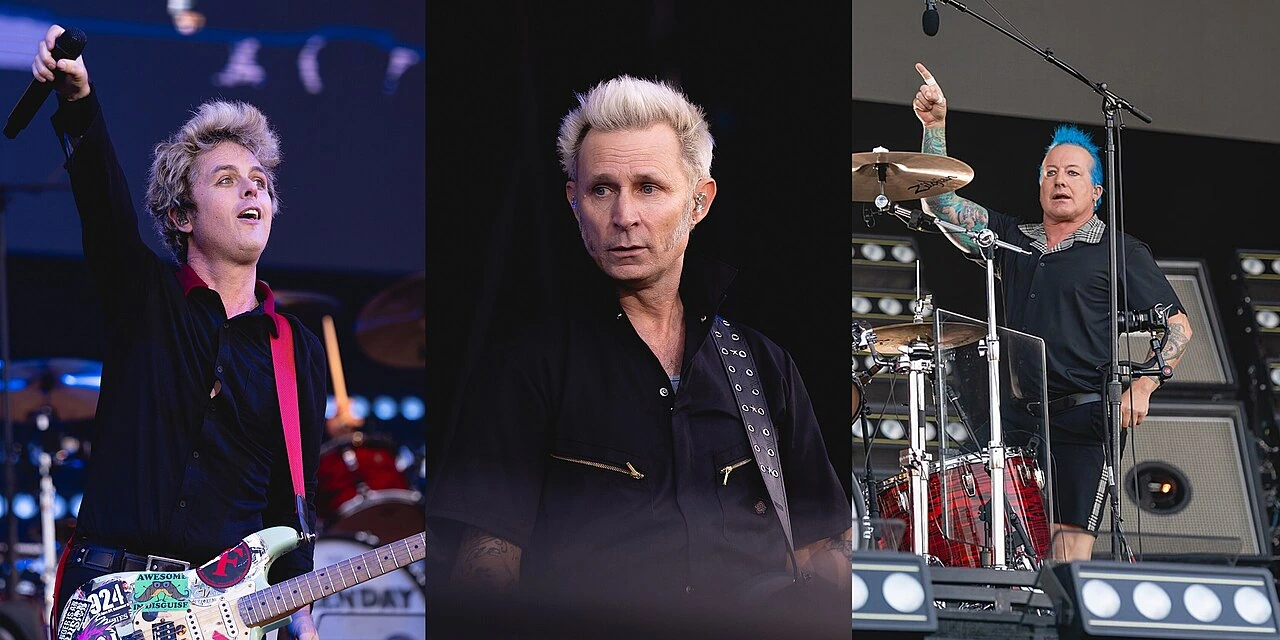
The most credible estimate for Billie Joe Armstrong's net worth in 2026 sits somewhere between $75 million and $150 million, with $75 million being the most widely cited and conservative figure. The honest answer is that no single number is definitive, but the $75 million mark from CelebrityNetWorth is the one most researchers and finance outlets treat as a baseline. A higher estimate of around $150 million exists, but it relies on assumptions that are harder to verify.
Billie Joe Net Worth: Range, Income Streams, and Proof

Marcus Finewood
1 Jun 2026

What's clear is that Armstrong is comfortably in the top tier of rock musician wealth, built over three decades of album sales, relentless touring, and a songwriting catalog that keeps generating royalties. While Billie Joe Armstrong is often the one discussed in these net worth estimates, Bonnie Prince Billy is a different artist with his own financial figures bonnie prince billy net worth.
Quick answer: Billie Joe Armstrong's 2026 net worth estimate
The realistic range for Billie Joe Armstrong's net worth as of 2026 is $75 million to $150 million. CelebrityNetWorth places him at $75 million, CelebsMoney puts it at $55 million for 2026, and CineNetWorth estimates closer to $150 million. The spread is wide, which is typical for musicians whose income mixes public data (album certifications, tour grosses) with private figures (publishing deals, licensing, personal investments). If you need one number to anchor on, $75 million is the most frequently cited and defensible figure given what's publicly verifiable about Green Day's career earnings. If you are specifically trying to estimate Billie Bird net worth, you would need to rely on similar modeling of income sources and verified public performance data.
| Source | Estimate | Notes |
|---|---|---|
| CelebrityNetWorth | $75 million | Most widely referenced; baseline estimate |
| CelebsMoney | $55 million | 2026-specific estimate; lower than most peers |
| CineNetWorth | $150 million | Updated 2026; calculation methodology not fully transparent |
Who exactly is "Billie Joe" and why it matters

When people search "Billie Joe net worth," they are almost always looking for Billie Joe Armstrong, the co-founder, lead vocalist, and primary songwriter of Green Day. Born William Joseph Armstrong III on February 17, 1972, in Oakland, California, he is one of the most recognizable figures in punk and alternative rock. He co-founded Green Day in 1987 alongside bassist Mike Dirnt, and the band went on to become one of the best-selling rock acts of all time.
The name disambiguation is worth a quick note. This site covers a range of Billy-named personalities, and there are other public figures with similar names. "Billie" on its own could point to pop star Billie Eilish, whose net worth profile is a separate subject entirely. If you are also trying to understand Billie Eilish's brother earnings, a similar approach to estimating net worth applies Billie Eilish brother net worth.
There is also a Billie Bird, a Billie Boullet, and various other Billie-named figures with their own financial profiles. Billie Boullet net worth figures can be highly variable depending on the source and the assumptions used. The Billy Bird net worth topic often comes from name confusion, so verify you are comparing the right person. If you meant the Billie Bird net worth question, double-check the spelling because this article focuses on Billie Joe Armstrong.
None of those apply here. This article is specifically about Billie Joe Armstrong of Green Day, the musician.
Why the estimates are so different from each other
Net worth is assets minus liabilities. Simple in theory, nearly impossible to calculate precisely for a private individual. No public figure is required to disclose a personal balance sheet, so every estimate you see online is built from reverse engineering: take known income streams, apply industry-standard royalty and revenue models, subtract reasonable expense and tax assumptions, and arrive at a number. Each site doing this math makes different assumptions, which is why you can see a $55 million estimate and a $150 million estimate existing side by side for the same person.
For Billie Joe Armstrong specifically, the complicating factors include how much Green Day's publishing catalog is worth (publishing rights can be valued anywhere from 10x to 25x annual royalty income depending on market conditions), whether estimates account for real estate holdings, personal investments, or other business interests, and how tour revenue is split among the band, management, agents, crew, and venue partners. None of these figures are publicly audited. What you can verify are things like album certifications, Billboard chart performance, and reported tour grosses from trade outlets like Pollstar.
Where the money actually comes from

Armstrong's wealth comes from several overlapping income streams that have compounded over 30-plus years. Here is how those break down:
Album sales and streaming royalties
Green Day has sold over 75 million records worldwide. Their breakthrough album "Dookie" (1994) has been certified 10x Platinum in the US alone. "American Idiot" (2004) is 6x Platinum in the US and sold over 15 million copies globally. "21st Century Breakdown" and "Revolution Radio" also performed well commercially. Physical album sales generated significant upfront income in the 1990s and 2000s. Today, streaming on Spotify, Apple Music, and YouTube provides ongoing royalty income, though per-stream rates are a fraction of what physical sales once paid.
Touring and live performance

Touring is almost certainly the single largest income driver for Armstrong and Green Day. Major tours routinely gross tens of millions of dollars. The "21st Century Breakdown World Tour" in 2009-2010 was one of the highest-grossing rock tours of that period. The "Revolution Radio Tour" in 2016-2017 and subsequent outings continued that pattern. In 2024 and into 2025, Green Day's "Saviors" tour was a major stadium-level run supporting their album of the same name, adding meaningfully to the band's collective and individual earnings. For headline rock acts at Green Day's level, a single world tour can generate $50 million to $100 million or more in gross revenue before expenses and splits.
Songwriting credits and publishing income
Armstrong writes or co-writes virtually every Green Day song, which means he holds songwriter royalties on one of rock's most durable catalogs. Publishing income comes from radio play, sync licensing (TV, film, commercials, video games), streaming mechanical royalties, and sheet music. Songs like "Basket Case," "Boulevard of Broken Dreams," "Wake Me Up When September Ends," and "American Idiot" are cultural fixtures that generate licensing revenue continuously. The "American Idiot" Broadway musical adaptation (2010) added another layer of licensing and royalty income tied to the intellectual property.
Side projects and other ventures
Armstrong has maintained side projects throughout his career, including the band Pinhead Gunpowder and the pop-punk supergroup The Network. He has also done acting work and various brand collaborations over the years. These contribute to income but are not the dominant drivers of his wealth compared to Green Day's core business.
How his wealth has grown over time
Armstrong's financial trajectory closely mirrors Green Day's commercial arc. Here is how the key milestones map to his wealth accumulation:
- Pre-1994: Green Day signs to Reprise Records after early indie releases on Lookout! Records. Income is minimal, band is touring small venues.
- 1994: "Dookie" releases and sells over 10 million copies in the US, generating Armstrong's first major royalty and advance income. The band's commercial profile shifts permanently.
- 1995-2003: Follow-up albums "Insomniac," "Nimrod," and "Warning" perform solidly but not at "Dookie" levels. Touring remains a consistent income source. Wealth accumulates steadily.
- 2004-2005: "American Idiot" becomes a global phenomenon. The album wins the Grammy for Best Rock Album, sells over 15 million copies worldwide, and the accompanying "American Idiot Tour" is a massive commercial success. This era likely represents the single largest wealth acceleration in Armstrong's career.
- 2009-2010: "21st Century Breakdown" wins another Grammy and the world tour extends Green Day's global draw. The Broadway musical adaptation of "American Idiot" opens in 2010, adding IP licensing income.
- 2012-2016: Armstrong publicly addresses personal struggles and takes time away from touring. The band's output slows but royalty income continues passively. The "Trilogy" albums ("Uno," "Dos," "Tre") release in 2012.
- 2016-2019: "Revolution Radio" tops the Billboard 200 and the subsequent tour is strong. Armstrong's financial position stabilizes and grows with sustained touring activity.
- 2020-2023: The COVID-19 pandemic halts live touring globally, affecting all touring musicians' active income. Streaming royalties continue.
- 2024-2026: The "Saviors" album and world tour mark a major commercial return. Stadium-level touring at this scale significantly adds to Armstrong's net worth, supporting estimates in the $75 million to $150 million range as of mid-2026.
How to check or update these numbers yourself
If you want to stress-test any estimate you find, here is what to actually look at. These are the data points that are publicly verifiable and directly inform net worth calculations for a musician like Armstrong.
- RIAA certifications: The Recording Industry Association of America maintains a searchable database of album and single certifications. You can verify how many platinum and gold certifications Green Day holds in the US, which maps directly to minimum sales thresholds.
- Pollstar tour grosses: Pollstar is the music industry's primary trade publication for live event data. Search Green Day tour names to find reported gross revenue figures from major tours. These are not artist-net figures but give a sense of scale.
- BMI and ASCAP databases: Armstrong is registered with ASCAP as a songwriter. These performing rights organizations track radio and public performance royalties. You can look up works registered under his name to confirm the catalog scope.
- Grammy and Billboard records: These are publicly indexed. Grammy wins and chart performance are verifiable facts, not estimates, and help calibrate how commercially significant specific albums were.
- Reputable financial journalism: Outlets like Forbes, Billboard, and Variety occasionally publish earnings estimates for major artists tied to specific tour cycles. These are more reliable than generic celebrity net worth sites because they typically cite specific reporting periods.
- Real estate records: Property ownership is public record in most US jurisdictions. Armstrong has been reported to own property in the San Francisco Bay Area. County assessor databases can confirm property values as one asset data point.
The honest bottom line: no third-party site, including the ones reporting $55 million, $75 million, or $150 million, has access to Armstrong's actual financial statements. Every number is a model, not a disclosure. As Wikipedia notes, “net worth” figures from sites like CelebrityNetWorth are estimators rather than audited financial disclosures [Every number is a model, not a disclosure](https://en. wikipedia.
org/wiki/CelebrityNetWorth). The $75 million figure from CelebrityNetWorth is the most commonly repeated and sits within a plausible range given what is publicly known about Green Day's decades-long commercial output. The $150 million figure is possible if you assign high valuations to the publishing catalog and account for real estate and investments, but that calculation is speculative.
Use the $75 million as your baseline, treat the range as $55 million to $150 million, and weight newer estimates more heavily as the "Saviors" era tour data becomes more fully reported through 2026.
FAQ
Why do net worth sites disagree so much on Billie Joe Armstrong, even when they’re using the same career facts?
Most models use the same public inputs but apply different assumptions, especially for publishing value (which can be many times annual royalties), investment and real estate holdings (often guessed from limited signals), and how much of tour gross translates to take-home income after expenses and revenue splits.
If the article says touring is a major driver, why can’t you just estimate net worth from tour gross?
Tour gross is revenue before key deductions like production costs, travel, crew expenses, insurance, promoter fees, and the split among the band, management, booking agents, and venue partners. Net worth depends on net income over years, not just headline box-office numbers.
Does Billie Joe Armstrong’s songwriting actually make his wealth more stable than just album sales?
Yes, songwriter royalties tend to persist. Album sales can spike when an album drops, but publishing streams from radio, streaming mechanicals, and licensing usually keep paying for decades, especially for long-running hits like “American Idiot.”
How do streaming royalties affect net worth compared with the physical sales era described for Green Day?
Streaming typically pays far less per unit than physical sales once did, so the royalty rate per stream matters a lot. That doesn’t eliminate streaming income, but it can shift the balance toward touring and publishing rather than expecting streaming alone to match the old album-sales income.
Are the $75 million to $150 million estimates meant to represent cash in hand, or total wealth?
They’re intended to represent net worth, conceptually assets minus liabilities. Because liabilities and the full list of assets are not publicly disclosed, the figures are best treated as modeled total wealth ranges, not spendable cash.
What’s the biggest “wild card” assumption that could push Billie Joe Armstrong toward the higher end of the range?
Publishing catalog valuation. If a model assigns a higher multiple to annual publishing royalties and assumes strong ongoing licensing performance, it can materially increase the top-end estimate, even if album and touring assumptions stay the same.
What could pull an estimate lower than the baseline $75 million?
Lower implied publishing value, conservative assumptions about investment returns, and higher assumed liabilities or ongoing business costs can all reduce modeled net worth. Some sites also discount IP and catalog value more aggressively than others.
If I want to sanity-check a new “Billie Joe net worth” number I see online, what should I compare first?
Check whether the new estimate’s logic emphasizes verifiable inputs (album certifications, documented tour grosses, and known songwriting role) versus heavy guesswork (specific real estate values, investment performance, and precise personal expense levels). Weight claims that are closer to hard data.
Does the estimate include income from side projects like Pinhead Gunpowder and The Network?
Usually, partially. Many net worth models center on Green Day because it dominates output and publishing, but side projects and other business ventures can add value, especially if they have ongoing royalties or licensing. The problem is that their economic impact is often harder to quantify.
How should I interpret “Billie Joe net worth” if I’m mixing him up with similarly named people?
Treat name disambiguation as essential. The article focuses on Billie Joe Armstrong of Green Day, while other “Billie” or “Billy” names can refer to entirely different people with separate income sources and net worth models, so matching the person and spelling matters before trusting any number.
Will Billie Joe Armstrong’s net worth keep rising automatically as Green Day tours, or can it flatten?
It can flatten if touring income growth slows, touring costs rise, or publishing and licensing gains offset less than expected. Net worth generally compounds over time, but the year-to-year change depends on net income after expenses and the duration that hits continue generating royalties.