
Billie Joe Armstrong's net worth is most commonly estimated at around $75 million as of 2025, though you will find figures ranging from that to wildly inflated numbers depending on where you look. The $75 million range is the most defensible given what we know about Green Day's career earnings, touring history, and publishing royalties. That is the number to anchor to, with the understanding that it is an estimate, not a confirmed audited figure.
Billie Joe Armstrong Net Worth: Estimate, Sources, and Breakdown

Marcus Finewood
18 Apr 2026
First, let's confirm who we're talking about

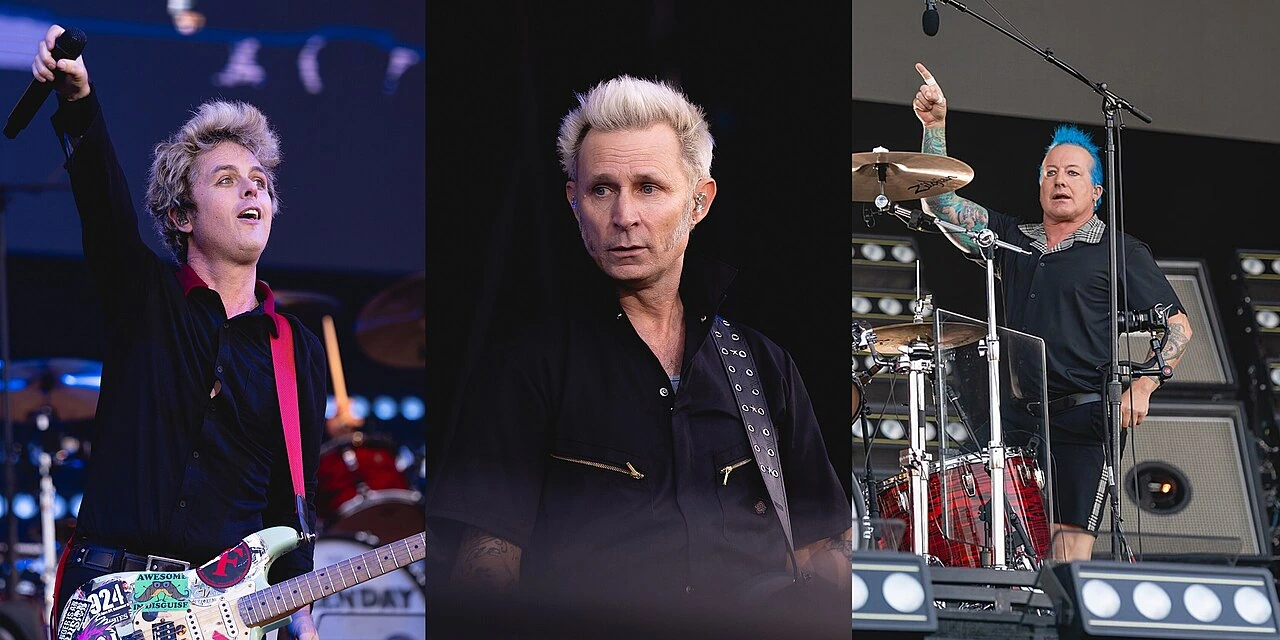
When people search "Billie Joe Armstrong net worth," they almost always mean the same person: the lead vocalist, guitarist, and primary songwriter of Green Day, born February 17, 1972. This site covers a range of notable Billy and Billie figures, so it is worth being explicit. This is not a search about Billie Bird's net worth, nor is it about Bonnie Prince Billy's net worth or any other Billie in the music world. Billie Joe Armstrong is the punk rock frontman who co-founded Green Day in the late 1980s in the East Bay area of California, and whose career spans over three decades of recording, touring, and songwriting.
He is also a Britannica-documented American musician and actor, which matters because his income profile is not purely band-based. He has written music for stage productions, collaborated on side projects, and built a public persona that extends well beyond Green Day. But the core of his wealth is Green Day, and that is where this breakdown focuses.
How celebrity net worth estimates actually work
Net worth estimates for musicians like Armstrong are not audited financial statements. No credible public source has access to his bank accounts, investment portfolio, or real estate holdings in full. What you get instead is a constructed estimate built from publicly available signals: reported album sales, touring revenues, publishing income proxies, and any documented business activities. Sites like Celebrity Net Worth openly acknowledge this in their disclaimers, noting that their figures are gathered from sources believed to be reliable but are not guaranteed to be accurate. Wikipedia describes CelebrityNetWorth itself as a site that reports estimates of total assets and financial activities, not confirmed figures.
Even methodologies used by more rigorous outlets have limits. Forbes, for example, scopes its highest-paid musician lists to income generated through musician activities and explicitly excludes outside business ventures, meaning any single ranking gives you only a partial picture. The upshot: when you see a number attached to Armstrong's name, treat it as a well-informed range, not a precise valuation. The gap between a $75 million estimate and a $245 million figure published by another site (Mediamass, last updated October 2025) illustrates exactly how wide that range can get depending on the methodology and, frankly, how much inflation different sites apply.
The current net worth estimate: what the numbers actually say

Two independently published estimates from mid-2025 land at $75 million. Finance-Monthly, as of June 2025, places his estimated net worth at $75 million and breaks it down by assumed income categories. Celebclive also publishes a 2025 figure of $75 million. On the other end, Mediamass claims $245 million, a figure that appears to be an outlier with a methodology that is not transparent and is widely considered unreliable by finance researchers who have dug into how that site generates numbers.
The most honest answer is a range of $70 million to $100 million, with $75 million as the central working estimate. That range accounts for asset appreciation (real estate in particular tends to be underreported), ongoing royalty income that compounds quietly over time, and the kind of financial privacy that someone at Armstrong's level can reasonably maintain. For comparison, Billie Joe's net worth as covered in a related profile on this site walks through similar estimation logic if you want to cross-reference the methodology.
| Source | Estimate | As of Date | Reliability Notes |
|---|---|---|---|
| Finance-Monthly | $75 million | June 2025 | Includes income category breakdown; estimate, not audited |
| Celebclive | $75 million | 2025 | Consistent with Finance-Monthly; methodology not detailed |
| Mediamass | $245 million | October 2025 | Widely considered an outlier; opaque methodology |
| Working range (this article) | $70M–$100M | April 2026 | Based on career earnings, royalties, touring, publishing signals |
Where the money comes from
Armstrong's income is not one thing. It is a layered stack of royalty streams, touring cuts, publishing ownership, and licensing deals that have been building since the early 1990s. Here is how each layer works.
Royalties from record sales and streaming
Green Day's catalog is genuinely massive. Dookie (1994) holds RIAA diamond certification, meaning it has sold or streamed the equivalent of 10 million units in the US alone. That kind of sustained back-catalog activity generates ongoing mechanical and streaming royalties. blank" rel="noopener noreferrer">American Idiot moved 267,000 copies in its first week alone to hit No. 1 on the Billboard 200, and it has continued selling internationally for two decades since. Albums at that sales level, paired with streaming consumption, produce royalty income that does not stop when the touring cycle ends. For a songwriter with Armstrong's catalog depth, this is a long-tail income engine.
Songwriting and publishing royalties
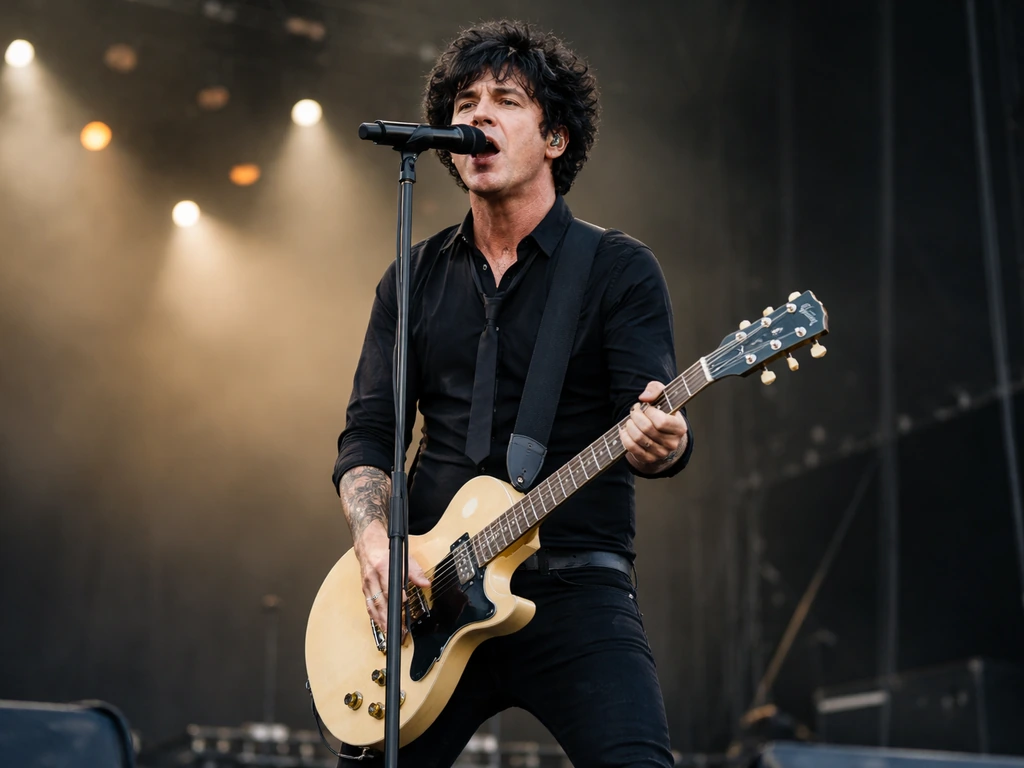
Armstrong is listed as a lyricist on "American Idiot" (the song) and is the primary songwriter across Green Day's catalog. This matters financially because songwriting ownership gives you a cut of performance royalties every time a song is played on radio, streamed, performed live by a cover band, or licensed for TV and film. Performance rights organizations like ASCAP collect and distribute these royalties for non-dramatic public performances, meaning Armstrong receives payments through that pipeline continuously. The more heavily licensed the catalog, the more significant this stream becomes. Green Day songs appear in films, commercials, video games, and TV shows regularly, and each placement generates publishing income.
Touring revenue
Green Day has been one of rock's most consistent touring acts for over 30 years. Major touring cycles, especially those tied to anniversary releases and new albums, generate front-end ticket revenue and backend merchandise income. Publicly available setlist and appearance databases document an extensive touring history, and at arena and stadium scale, the per-show gross for a band like Green Day can run into the hundreds of thousands of dollars per night. Armstrong's cut as frontman and co-owner of the band entity is a meaningful share of that. Touring income is the biggest single variable in any given year's earnings, which is why net worth figures can lag or jump depending on whether Green Day is on the road.
Signature instruments and endorsements
Armstrong has a documented collaboration with Gibson on a signature guitar model, which generates licensing and royalty income tied to each unit sold. This is a smaller income stream compared to touring and publishing, but it is recurring and brand-reinforcing. Signature instrument deals at his profile level typically involve an upfront fee plus a per-unit royalty, so the income scales with how popular the model remains in the market.
Side projects and other ventures
Outside of Green Day, Armstrong has been involved in the punk supergroup Pinhead Gunpowder and the band The Network (a side project with other Green Day members), as well as theatrical work tied to the American Idiot Broadway musical. Pinhead Gunpowder, according to Wikipedia, is a band associated with Billie Joe Armstrong, which is useful context for his side-project work blank" rel="noopener noreferrer">Pinhead Gunpowder is associated with Billie Joe Armstrong. Broadway licensing adds another publishing and royalty layer that most rock musicians do not have. These contributions are smaller relative to Green Day income but they diversify the earnings profile and keep royalties ticking even in years when the main band is quiet. Readers curious about financial profiles for other Billie-named artists in music might also find the coverage of Billie's net worth or the breakdown of Billie Eilish's brother's net worth useful for a sense of how publishing and side-project income compounds for music families and collaborative acts.
The career milestones that built the money
Armstrong's financial arc follows his career arc closely. Understanding when the big earning peaks happened explains why his estimated net worth is where it is today.
- 1039/Smoothed Out Slappy Hours (1990) and Kerplunk (1992): Early indie releases on Lookout! Records established the band but generated modest income. These years were about building a fanbase, not accumulating wealth.
- Dookie (1994): The major-label debut on Reprise Records changed everything. The album went on to earn RIAA diamond certification. This is the foundation of Armstrong's long-term royalty income and the record that made Green Day a mainstream name.
- Insomniac (1995) and Nimrod (1997): Solid follow-ups that kept the catalog active and touring revenue flowing, even as critical reception was mixed compared to Dookie.
- Warning (2000) and international touring: A creative pivot that maintained the fanbase and kept touring revenue consistent through a period when many post-Dookie punk acts had faded.
- American Idiot (2004–2006): The peak commercial and cultural moment. The album debuted at No. 1, sold over 267,000 copies in its first week, won the Grammy for Best Rock Album at the 47th Grammy Awards on February 13, 2005, and later spawned a successful Broadway musical. This era likely generated more income for Armstrong than any other single period.
- 21st Century Breakdown (2009) and ¡Uno! ¡Dos! ¡Tré! trilogy (2012): Continued major-label releases with arena touring cycles attached, sustaining income through the 2010s.
- Revolution Radio (2016) and Father of All... (2020): More recent releases that maintained chart presence and touring activity.
- Saviors (2024): The most recent Green Day album, keeping the band active in the new streaming era and adding fresh catalog inventory.
The American Idiot era stands out as the defining earnings peak. Grammy recognition, a No. 1 album with massive first-week sales, a decade of touring support, and eventually a Broadway run turned that single album cycle into a multi-decade income engine. The Library of Congress recording registry entry for Dookie, crediting Armstrong directly, underlines that the early catalog also has lasting institutional recognition, which correlates with continued licensing interest.
Assets, spending, and financial signals

Publicly documented financial signals for Armstrong include real estate ownership in California (consistent with where Green Day's roots are and where high-profile musicians of his generation typically own property). Specific transaction details are not consistently in the public record, so exact property values are not something this article will speculate on. What is documented is consistent with someone at the $75 million level: no visible financial distress signals, active ongoing career, and continued business activity.
On the gear and asset side, Armstrong has been noted for selling pieces of Green Day history through Reverb-style sales, which is a fairly common practice for musicians liquidating older equipment or memorabilia. This does not signal financial need; it is standard practice for artists managing large collections of instruments accumulated over decades. There are also documented associations with high-value vintage instruments, including his use of Steve Jones' Sex Pistols Les Paul during live performances, which speaks more to his place in rock history than to his personal balance sheet.
Endorsement income from the Gibson signature model is a recurring asset-adjacent revenue stream. While the exact terms are not public, signature guitar deals at his tier typically represent a modest but steady line of income that continues as long as the model remains in production. This is the kind of financial detail that sites like Billie Boullet's net worth profile or the Billy and Margot net worth breakdown do not cover for their subjects, which is a reminder of how Armstrong's income profile is comparatively diversified for a rock musician.
How to verify and update this number yourself
If you want to check these figures today or revisit them after a major career event, here is a practical approach to getting the most accurate picture possible.
- Cross-reference at least three net worth estimate sites and note their 'as of' dates. Discard obvious outliers like the $245 million Mediamass figure unless they provide transparent methodology. Treat consistent estimates ($70M–$80M range) as your working baseline.
- Check for recent touring activity. Green Day on a major world tour is the single biggest short-term earnings driver. Search Billboard, Pollstar, or setlist databases for current touring cycles and compare to prior years. A major tour can add several million dollars to net worth in a single calendar year.
- Watch for new album releases or anniversary tours. The Saviors album (2024) and any associated touring cycle will show up in year-end earnings coverage. Grammy nominations and wins generate licensing spikes that trail album releases by 6–12 months.
- Monitor RIAA certification updates for Green Day albums. New diamond, platinum, or gold certifications signal sustained catalog performance and ongoing royalty income.
- Look for real estate transaction records in California through county assessor databases. These are public records and give a more grounded picture of asset holdings than any celebrity net worth estimate.
- Check music licensing databases and ASCAP repertory listings for Green Day songs appearing in new film, TV, or commercial placements. Each placement generates publishing income that flows back to Armstrong as primary songwriter.
- Note any new Gibson signature model announcements or endorsement changes, as these affect recurring non-tour income.
The number will move. Armstrong is an active musician with a prolific catalog and ongoing touring capacity, so his net worth in 2027 or 2028 will likely differ from today's estimate. The framework above gives you the tools to update it yourself rather than relying on a single site's stale figure. For anyone tracking other Billie-named figures in a similar way, the same logic applies to profiles like Billy Bird's net worth, where ongoing career activity is the primary variable in any estimate update.
The bottom line: Billie Joe Armstrong's net worth sits most credibly at around $75 million as of early 2026, built on three decades of Green Day catalog royalties, consistent large-scale touring, songwriting publishing income, and a Gibson endorsement deal. The number is an estimate, not a bank statement, but it is grounded in verifiable career milestones and income proxies. Any major touring cycle or catalog licensing event is the most likely trigger to push it higher.
FAQ
Why do some sites list Billie Joe Armstrong net worth as over $200 million when others stay near $75 million?
Most high outlier numbers come from unclear assumptions about total assets, mixing income with net worth, or treating speculative venture values as confirmed holdings. If the methodology does not explain how they value real estate, investments, and liabilities separately, their result is usually best treated as unreliable.
Is the $75 million estimate closer to cash in the bank or total wealth?
Net worth estimates typically mean total assets minus estimated liabilities, not liquid cash. The article’s range is more consistent with long-term accumulated value from royalties and ownership, while cash balances can be far lower or fluctuate year to year.
How much can touring actually change his net worth in a single year?
Touring can drive short-term earnings significantly, especially during major album or anniversary cycles, but net worth usually reflects multi-year compounding. After travel costs, taxes, staff payments, and revenue splits with the band entity, the increase can be smaller than headline tour revenue suggests.
Do songwriting royalties keep paying even if Green Day is not touring?
Yes, if songs remain in rotation and licensing continues. Catalog music generates mechanical and streaming royalties, plus performance royalties via rights organizations, and these can keep flowing between tours as long as the publishing rights remain active and properly administered.
What’s the difference between performance royalties and licensing deals, and does it matter for estimates?
Performance royalties are tied to public performances, broadcasts, and streaming plays, distributed through collecting societies. Licensing deals are payments for specific uses like TV, film, ads, and games. A credible estimate should treat these as separate streams because their timing and amounts differ.
How can I tell if a quote about his net worth is outdated or misapplied to a different person?
Check whether the source states an update date and matches the exact subject (Billie Joe Armstrong of Green Day). Confusion is common with other “Billie/Billy” artists, and some articles recycle older numbers without updating assumptions.
Do endorsements like the Gibson signature guitar meaningfully affect net worth?
They can add a recurring revenue stream, often from an upfront component and ongoing per-unit royalties, but they are usually smaller than catalog royalties and large-scale touring for someone with Armstrong’s songwriting and back-catalog depth.
Could selling gear or memorabilia through platforms like Reverb affect the net worth numbers?
Generally, it can create one-time cash inflows, but these sales are usually not large enough to swing a multi-decade net worth estimate. They also do not prove financial distress, since musicians frequently liquidate duplicates or older tour items as part of gear management.
Does Broadway work change the type of income he receives compared with standard music royalties?
Yes. Broadway-related activity is often handled through publishing and licensing structures tied to theatrical productions, which can create royalties and licensing income patterns different from radio or streaming. It can diversify income timing even if the amounts are smaller than Green Day’s core catalog.
Why might net worth estimates ignore liabilities like taxes or debts?
Many estimates focus on gross asset signals and understate liabilities because detailed obligations are not public. That means even if the assets are estimated reasonably, the net worth result can still be overstated if debts, tax exposures, or business liabilities are not accounted for.
What event is most likely to push his net worth estimate higher?
A major touring cycle combined with catalog visibility, such as a new album release, a high-profile anniversary, or a renewed licensing wave, tends to be the strongest catalyst. Big one-off media placements can help, but sustained touring and catalog consumption are usually what move estimates over time.