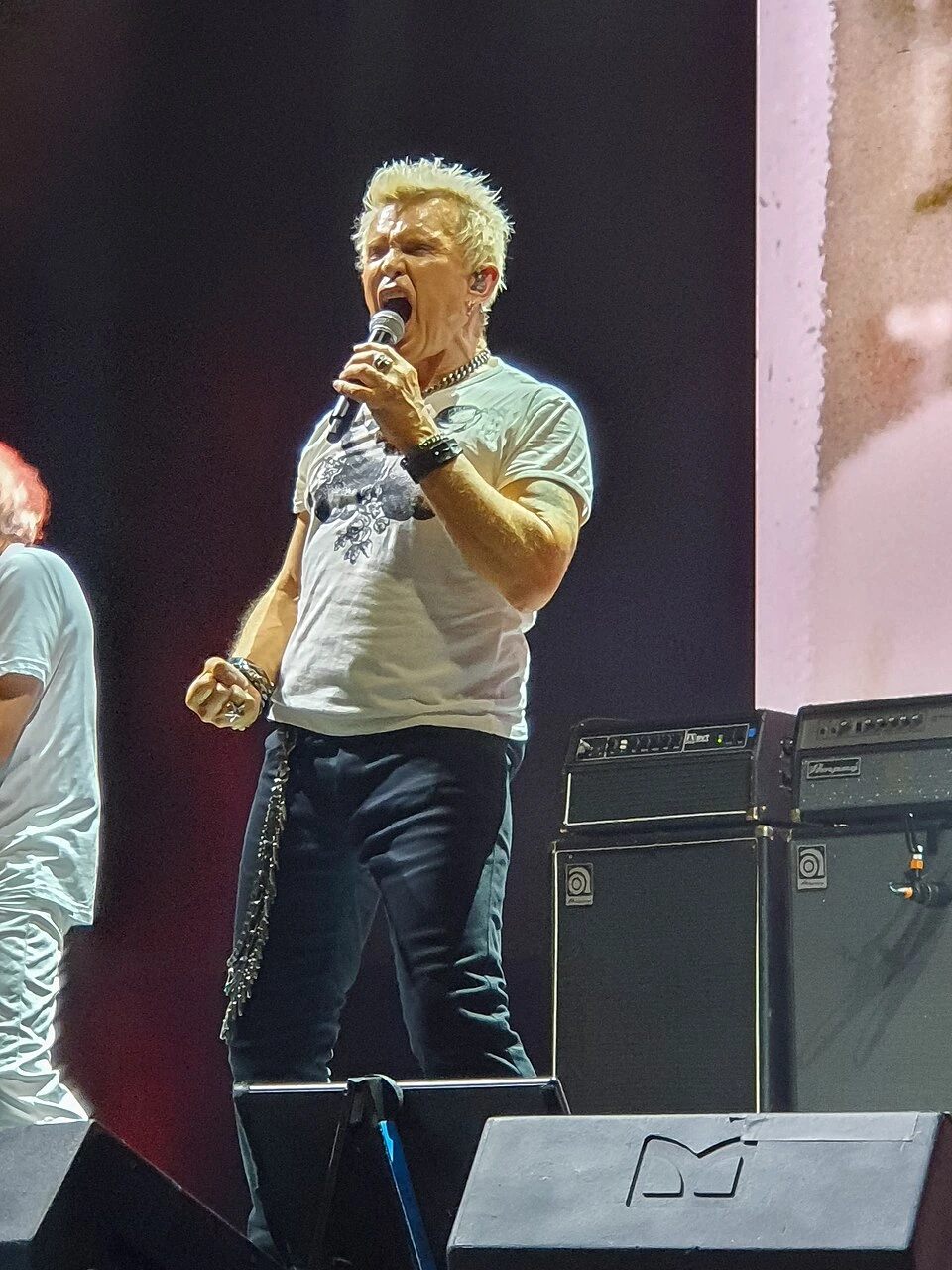
Billy Idol's net worth sits in the range of $50 million to $65 million, with $60 million being the most widely cited single-figure estimate as of early 2026. That is the short answer. The longer answer involves understanding why different sources publish wildly different numbers, what actually drives the figure, and how it has shifted across more than four decades of one of rock's most recognizable careers.
Billy Idol Net Worth Explained: Sources, Income Timeline

Marcus Finewood
27 Mar 2026
What 'net worth' actually means here (and why the numbers don't always agree)
Net worth is simply total assets minus total liabilities. For a celebrity like Billy Idol, that means adding up the estimated value of everything he owns or is owed (music catalog, royalty streams, property, investments, cash, merchandise rights) and subtracting debts, mortgages, and any other obligations. The problem is that almost none of that information is public. Celebrity net worth figures are almost always educated estimates built from observable data points: known touring income, album sales history, catalog licensing activity, and general industry benchmarks.
That is exactly why sources disagree so dramatically. CelebrityNetWorth.com, updated as recently as March 5, 2026, puts the number at $60 million. Manchesterherald reports a range of $50 million to $65 million for 2025. Mediamass, an aggregator that uses algorithmic methods and often inflates figures significantly, claims $145 million. That last number is almost certainly unreliable. Mediamass-style sites are well known for methodology that doesn't withstand scrutiny, and the $145 million figure is wildly out of step with every other credible source. Treat $50–$65 million as the defensible range and $60 million as a reasonable midpoint.
Billy Idol's current net worth snapshot

| Source | Estimate | Date / Notes |
|---|---|---|
| CelebrityNetWorth.com | $60 million | Last updated March 5, 2026 |
| Manchesterherald | $50M–$65M range | 2025 estimate |
| Mediamass | $145 million | Algorithmic aggregator — treat with skepticism |
| Working consensus range | $50M–$65M | Best supported by cross-source comparison |
For practical purposes, if you need a single number to work with, $60 million is the most defensible figure available right now. It reflects a career that includes massive album sales from the 1980s, sustained touring income through multiple decades, a revived catalog with fresh commercial activity in 2025, and structured merchandise and licensing deals. It also accounts for the very real costs of that career: documented personal struggles, periods of reduced output, and the general financial drag of maintaining a legacy rock operation.
Where the money actually comes from
Music royalties and catalog value

Billy Idol's recorded catalog is the foundation of his wealth. Albums like Billy Idol (1982), Rebel Yell (1983), and Whiplash Smile (1986) sold millions of copies globally and continue to generate streaming royalties decades later. "White Wedding," "Rebel Yell," and "Eyes Without a Face" are among the most-licensed rock tracks of the era, appearing regularly in films, television, and advertising. That kind of evergreen placement earns meaningful sync licensing fees year after year. His most recent full-length album, Dream Into It, was released on April 25, 2025, through Dark Horse Records, and it landed in the Top 10 of Billboard's album sales chart, which signals genuine commercial traction for a new release cycle rather than just nostalgia-driven streaming. The singles "Still Dancing" and "77" were released in 2025 ahead of the album, with rights spread across BFI Records and other entities, reflecting the layered rights structure common in modern catalog management.
Touring income
Live performance has been a consistent and significant income driver. Pollstar data gives a concrete illustration: a single Billy Idol show in Canada grossed $565,446 off 7,774 tickets sold. Extrapolate that across a 30-date North American tour he had planned for 2025, and you are looking at gross touring revenue that could realistically exceed $15 million for that tour cycle alone, before management fees, production costs, and other tour expenses. He also announced a North American headline tour in early 2023, meaning the 2022–2025 window included multiple active touring periods. For an artist at his level, touring is often the single largest annual income event.
Merchandise and licensing

Merchandise is a structured business for Billy Idol, not a side activity. Epic Rights, a merchandise and branding company, counts him as a represented artist. Universal Music Group's Bravado subsequently acquired Epic Rights, bringing Billy Idol's merchandise and licensing operations under the umbrella of one of the largest music merchandising operations in the world. That kind of representation means revenue from apparel, brand collaborations, and licensed imagery is actively managed and monetized, rather than left to informal or ad-hoc deals.
Other income streams
Beyond core music and touring income, celebrities at Idol's level typically hold real estate assets and investment portfolios that contribute to net worth independently of active earnings. No specific verified property holdings or investment details are publicly confirmed for Idol, but it would be unusual for someone managing this level of career income across four decades not to hold meaningful non-music assets. What is publicly verifiable is his continued engagement with media, brand partnerships, and the sustained cultural relevance that keeps his licensing value high.
How his wealth has built up over the decades

Looking at Billy Idol's financial trajectory by career era gives a much clearer picture than any single number. He was born in November 1955, which means he is 70 years old as of early 2026. His wealth-building journey spans roughly four distinct phases.
| Era | Age Range | Key Activity | Wealth Impact |
|---|---|---|---|
| Generation X / Early Solo (1976–1982) | 20–26 | Punk band Generation X; early solo deal | Low to moderate earnings; building profile |
| Peak Commercial Era (1982–1990) | 26–34 | Rebel Yell, Whiplash Smile, multi-platinum albums, MTV dominance, Charmed Life | Highest single-era earnings; foundation of catalog wealth |
| Disruption and Recovery (1990–2001) | 34–45 | Motorcycle accident (1990), mixed-reception albums, reduced touring | Significant setback; earnings fell sharply; some catalog income sustained |
| Catalog and Revival (2002–2021) | 46–65 | Autobiographical work, festival appearances, Devil's Playground (2005), steady touring | Moderate and recovering; touring income rebuilds net worth |
| Active Later Career (2022–present) | 66–70 | The Cage EP (2022), 30-date tour (2023), Dream Into It (2025), Billboard Top 10 | New income cycle; catalog and live income both active simultaneously |
The peak commercial era from his late 20s through mid-30s is almost certainly when the bulk of his catalog wealth was built. Rebel Yell alone sold over two million copies in the U.S. and generated global sales and licensing income that has compounded over 40 years. The 1990 motorcycle accident and the subsequent years of reduced output were a real financial disruption, both in lost touring income and in the psychological shift that comes with a near-career-ending event. But by his late 40s and 50s, he had rebuilt a sustainable touring and legacy-artist business. The 2022–2025 window is genuinely active: a new EP, a new album with a Top 10 chart placement, and a multi-city North American tour, all at age 69–70. That is not a passive retirement income situation.
Key financial milestones and what we know about spending
A few specific financial milestones stand out as verifiable anchors in the wealth story. The multi-platinum commercial run of 1983–1990 established catalog assets that still pay royalties today. The 1990 motorcycle accident resulted in documented medical expenses and a period of career disruption that likely reduced net worth in real terms during the early 1990s. The publication of his 2014 autobiography, Dancing with Myself, opened new licensing and brand-identity income channels. And the 2025 Dream Into It cycle, released on Dark Horse Records with BMG involvement, represents the most recent documented new-income event.
On the spending side, the public record is thinner. There is no verified data on real estate holdings, investment portfolios, or specific expenditures that would allow a precise liability calculation. What is reasonable to assume, based on his career longevity and the scale of his income periods, is that he has managed a mix of high-cost years (peak touring production budgets, personal lifestyle costs during the height of his fame) balanced against the kind of passive catalog income that continues regardless of activity level. Avoiding speculation here matters: the $60 million estimate is credible precisely because it reflects a conservative read of verifiable income sources, not assumptions about lifestyle or hidden assets.
For context, Billy Corgan's net worth sits in a comparable range among rock artists who built their wealth during the same general era, showing that the $50–$65 million band is consistent with what 1980s and 1990s rock-era catalog artists typically accumulate over decades of sustained activity.
How to verify and update the number yourself

If you want to do your own cross-check rather than just accepting a published figure, here is a practical approach. Start with CelebrityNetWorth.com as a baseline, but note the update date and treat it as an estimate with a margin of error of roughly 20–30%. Cross-reference with at least one other source and flag any outliers (like the Mediamass $145 million figure) as methodologically suspect.
- Check Pollstar's boxoffice database for recent tour gross data. Even a few reported shows give you a per-show revenue baseline to estimate tour cycle income.
- Search Billboard for chart positions on recent releases. A Top 10 album placement, as Dream Into It achieved in 2025, signals active commercial income, not just catalog passive income.
- Look for merchandise and licensing news. Announcements like the Epic Rights / Bravado acquisition are public and tell you whether licensing income is being actively managed.
- Search for any documented real estate transactions in public property records if you want to estimate asset base more precisely.
- Compare the figure against peers. Billy Crystal's net worth and similarly tenured entertainers provide a useful reality check on whether a figure is plausible for someone at that career stage.
- Flag and ignore algorithmic aggregators like Mediamass. These sites do not conduct interviews, access financial records, or use audited data. Their figures are statistically generated and often off by a factor of two or more.
One important distinction to keep in mind: no published net worth figure for a private individual is an audited number. These are estimates. Even the best-sourced figures from CelebrityNetWorth.com are built from observable proxies, not tax returns or balance sheets. That does not make them useless. It means you should treat them as ranges with uncertainty bands, not precise facts. The $50–$65 million range is well-supported. Whether the true figure is $55 million or $70 million is genuinely unknowable from public information alone.
Common myths about celebrity net worth that trip people up
A few persistent misconceptions tend to distort how people interpret celebrity wealth figures, and they apply directly to how you should read Billy Idol's number.
- Album sales revenue equals personal wealth: It does not. Label contracts, producer points, co-writer splits, and recoupable advances mean an artist may receive a fraction of the gross revenue a platinum album generates. Idol's specific deal structures from the 1980s are not public, but most major-label artists of that era received royalty rates in the 10–15% range after recoupment.
- Net worth equals annual income: A $60 million net worth does not mean Billy Idol earns $60 million per year. It is an estimated accumulated wealth figure. His annual income in recent years is likely a fraction of that total, driven by touring, royalties, and licensing.
- Older artists have static wealth: The 2025 tour and Dream Into It album are evidence that Idol is actively adding to his income base, not just drawing down legacy assets. New albums reset streaming algorithms, increase sync licensing interest, and justify premium ticket pricing for tours.
- High-number outliers are more accurate because 'they know something': Sites publishing $145 million figures are not using better data. They are typically using formulas that multiply social media followers or streaming counts by arbitrary multipliers. Cross-source consistency is a better indicator of accuracy than the size of the number.
- Career disruptions permanently reduce net worth: The 1990 accident and subsequent slower period were real setbacks, but catalog income is largely passive. Royalties from 'White Wedding' did not stop because Idol was recovering. The long-term wealth impact of disruption is real but often overstated.
The broader pattern here applies to any celebrity wealth research you do on this site. Whether you are looking at Billy Ray Cyrus's net worth or any other Billy-named artist, the methodology for evaluating a figure is the same: find the cross-source consensus range, identify the income drivers that support it, flag outliers, and resist treating any single published number as ground truth. Billy Idol's $60 million is the most credible current estimate, grounded in a career that is still generating real income in 2025 and 2026.
FAQ
Is Billy Idol net worth an audited number, or is it an estimate? Why do numbers change so much?
No, net worth estimates are not audited figures, they are modeled from public signals. A practical way to sanity-check the $50–$65 million range is to compare expected royalty income from evergreen sync and streaming (which tends to be steadier) against the most recent touring gross potential (which is spiky). If a source ignores royalties and only extrapolates touring, the number usually swings higher or lower depending on how they model “gross” versus “take-home.”
How much of Billy Idol net worth comes from his music catalog, and is it all under his control?
A common mistake is treating the catalog as “owned free and clear.” Even when an artist’s masters and publishing are central to wealth, rights are often split among labels, publishers, and administrators, which means royalty rates depend on negotiated splits, not just record sales totals. That rights layering can keep the royalty stream valuable while still limiting how much of the full catalog revenue actually reaches Idol directly.
Why can reported touring grosses look huge, but net worth estimates do not match those amounts directly?
For touring, gross revenue and net income are very different. Even if a show grosses hundreds of thousands, management fees, production costs, staffing, travel, venue splits, and promotional expenses can take a meaningful cut. If you want to model it, use a conservative net margin assumption rather than starting from “box office gross equals income.”
Does Billy Idol’s 2025 album release meaningfully change his net worth, or is it mostly about publicity?
Dream Into It’s chart success matters because it usually increases leverage for future deals, licensing, and attendance demand, but it does not automatically mean a major one-time financial windfall. The bigger wealth impact is often longer-term, consistent licensing activity and sustained interest that supports tours and catalog placements after the release cycle.
Is Billy Idol merchandise income included in net worth estimates, and what can make it stable or unpredictable?
Merchandise revenue is typically driven by representation and deal terms, such as brand collaborations, licensing duration, and how revenue is shared with rights holders and platforms. Since his merchandise operations are described as managed under large industry structures, the key question is not whether merchandise exists, but whether the deals are long-running, well-priced, and performance-based versus one-off, which affects how stable the income is.
How can I tell whether a Billy Idol net worth figure is an outlier or likely based on weak methodology?
If you see a net worth figure far outside the consensus range, the quickest diagnostic is to look for claims that rely heavily on unverifiable assets, like specific real estate values or “total business ownership,” without showing how those numbers translate into credible cashflows. In this case, an outlier like the much higher figure is likely overfitting assumptions rather than grounding them in observable touring, catalog licensing, and deal structure data.
What kinds of changes can increase or decrease Billy Idol net worth even if his music output is consistent?
Net worth can shift even when an artist is not actively releasing music, because catalog income, sync placements, and continued licensing can accumulate over time. At the same time, liabilities can rise due to taxes, legal costs, settlements, or lifestyle-related expenses in high-earning periods, which is why a net worth number can drop without any dramatic fall in popularity.
If property and investments are not well documented, how should you interpret the accuracy of his net worth estimate?
Bill Idol’s non-music assets are not clearly documented publicly, so the defensible approach is to treat them as an unknown that can widen the uncertainty band. If you want to be extra careful, focus your cross-check on income drivers that are easier to observe, royalties and recurring licensing, plus touring windows you can time and compare year to year.