
Billy Molls' net worth is estimated in the range of $500,000 to $1.5 million as of May 2026, with a low-to-moderate confidence level given the limited public financial disclosure typical of independent outdoor industry professionals. That range reflects roughly 25 years of income from Alaskan big-game guiding, DVD sales and licensing, public speaking, and author royalties, none of which are reported in filings or verified salary databases, so the figure is built from career-stage benchmarks and industry comparisons rather than hard public records.
Billy Molls Net Worth: Estimate, Sources, and Method

Marcus Finewood
2 May 2026
Which Billy Molls are we talking about?
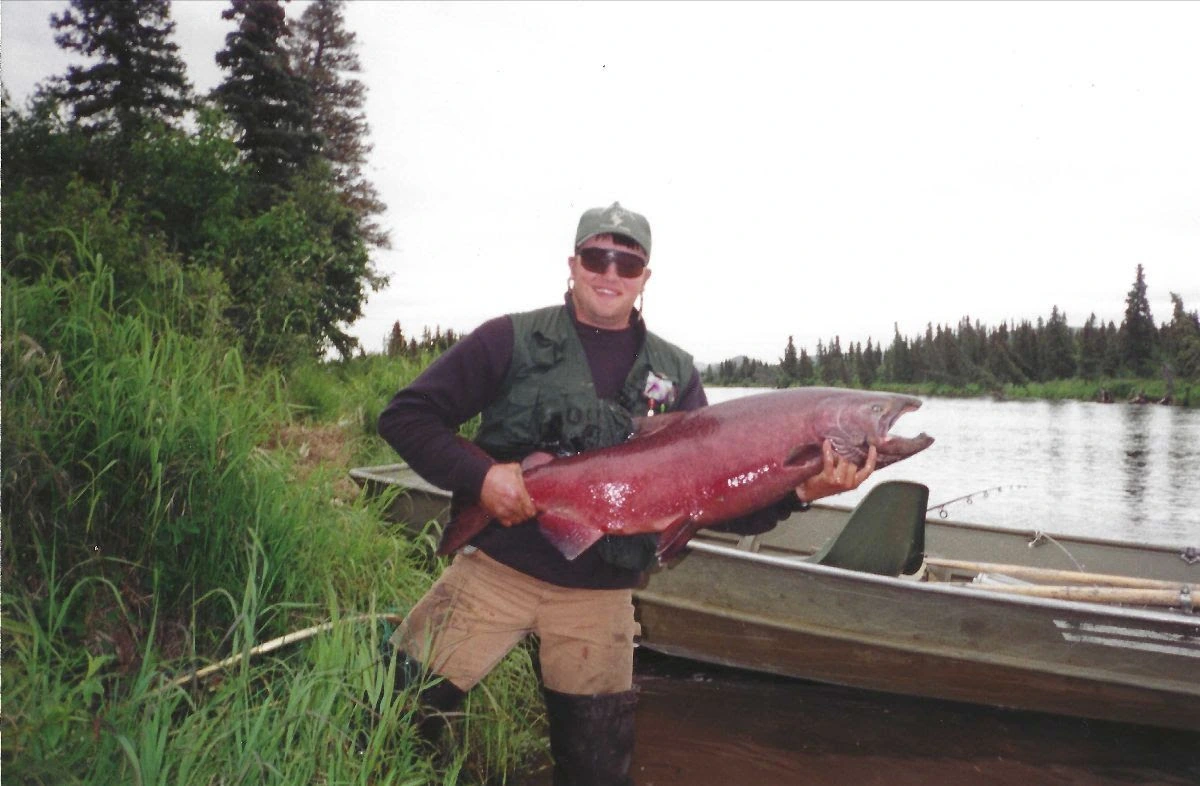
Before getting into numbers, it's worth locking down the identity here, because name confusion is a real problem with net worth searches. If you came here from “billy miller net worth” style queries, the key thing to remember is that search results can easily mix up different people with similar names net worth searches. The Billy Molls this article covers is a Wisconsin-born hunting guide, outdoor filmmaker, author, and public speaker based out of Alaska. He grew up on a dairy farm in Turtle Lake, Wisconsin, left at age 19 to pursue guiding, completed a formal guide school and apprenticeship program, and went on to become a licensed Alaskan big-game hunting guide. He's the creator of 'The Modern Day Mountain Man' DVD series and has been featured in Hunt Alaska Magazine. His business, Billy Molls Adventures, is his primary professional platform.
He is not a musician, actor, or athlete. If you found this page while searching for a Billy Molls in entertainment or sports, this is a different person entirely. The site also covers other notable Billys, including Billy Mills (the Olympic runner and activist), Billy Miller (the actor), and Billy Bolt (the extreme enduro champion), so it's easy for searches to blur across profiles. This article is specifically about the Alaskan hunting guide and outdoorsman.
What 'net worth' actually means and how estimates get built

Net worth is simply total assets minus total liabilities. For a private individual like Billy Molls, that means adding up everything he owns, cash, property, equipment, business value, intellectual property, and subtracting any debts or obligations. The challenge is that none of this is publicly disclosed for someone outside of corporate reporting or celebrity-level media scrutiny.
When a figure like Molls hasn't published financial statements and doesn't appear in SEC filings or Forbes lists, estimators work backward from career data. The approach looks like this: How long has he been working? What does someone at his level in this industry typically earn? What products or assets could generate ongoing income? Are there any property records, business registrations, or contract mentions that give hard data points? From there, you build a plausible range, not a precise figure. That's exactly what the estimate here reflects.
Current net worth estimate and confidence level
The working estimate for Billy Molls' net worth sits between $500,000 and $1.5 million as of May 2026. If you are specifically trying to verify Billy Bolt net worth claims, note that different sources may be mixing profiles or using unverified assumptions 5 million. The midpoint, call it roughly $900,000 to $1 million, is the most defensible single number given what's known about his career length and income streams. Confidence in this range is moderate at best. There are no public financial disclosures, no business valuations on record, and no verified salary data. What drives the estimate upward from zero is a 25-plus-year career in a high-value guiding niche, a catalog of commercial video content, and ongoing speaking and author income. What keeps the ceiling relatively modest is that Alaska big-game guiding, while premium-priced, is a small-scale business, not a scalable media empire.
| Factor | Impact on Estimate | Direction |
|---|---|---|
| 25+ years of guiding income | Primary earnings base, likely $60,000–$150,000/year at peak | Upward |
| DVD/video catalog (Modern Day Mountain Man) | One-time production costs offset by ongoing passive sales | Upward (modest) |
| Public speaking fees | Industry speakers in outdoors niche typically earn $2,000–$10,000 per engagement | Upward |
| Author royalties | Typically modest unless in a major publishing deal | Upward (small) |
| Small-business liabilities and overhead | Equipment, insurance, licensing, seasonal variability | Downward |
| No publicly verified assets or filings | Adds uncertainty and limits upper range | Constraining |
Where his money comes from: income sources and career timeline

Billy Molls' earnings story is that of a career outdoorsman who built income across several related streams rather than one dominant paycheck. Here's how it maps across his career:
Early career: guiding as the core income
After leaving Wisconsin in his late teens and completing guide school, Molls built his guiding operation in Alaska over the early years of his career. Licensed Alaskan big-game guiding, particularly for species like brown bear, moose, caribou, and Dall sheep, commands significant fees. The Alaska Department of Fish and Game notes in a “Choosing a Big Game Guide” Wildlife News release that, when nonresidents hunt for brown or grizzly bears, Dall sheep, or mountain goats, they must hunt with a licensed registered guide or qualify through close relatives who are Alaska residents blank" rel="noopener noreferrer">licensed Alaskan big-game guiding. Trophy hunt packages in Alaska regularly run from $10,000 to over $25,000 per client depending on species and duration. An established guide running multiple clients per season can generate six-figure gross revenue, though overhead (licensing, transportation, camp infrastructure, insurance) takes a meaningful cut.
Mid-career: expanding into media and speaking
Molls developed 'The Modern Day Mountain Man' DVD series, which established him as a recognizable figure in the outdoor media space. That content, mentioned in Hunt Alaska Magazine's 2018 materials, gave him a media-based income layer: direct DVD sales, potential licensing to outdoor networks, and the credibility to land paid speaking engagements. Public speakers in the hunting and outdoor recreation space, especially those with established video credentials, typically earn between $2,000 and $10,000 per event, with the higher end reserved for keynote appearances at major trade shows and hunting conventions.
Ongoing: author income and brand presence
His work as an author adds royalty income, though book royalties in a niche outdoor market are typically modest, think low five figures annually unless a title breaks out to a wider mainstream audience. His website, Billy Molls Adventures, serves as both a booking platform and brand hub, potentially generating additional income through merchandise, affiliate marketing, or online content, though the scale of that is unknown.
Assets, ownership, and what's actually public

This is where transparency is critical: almost nothing about Billy Molls' personal assets is verifiable through public records. What can reasonably be inferred is that a 25-year guiding career in Alaska likely involved investment in physical assets, hunting camp infrastructure, boats, ATVs, aircraft access or ownership, camp equipment, and firearms, all of which depreciate but represent real capital deployed. Any property ownership in Alaska or Wisconsin would appear in county property records, but no such records have surfaced in available research.
On the business side, Billy Molls Adventures is presumably a small-business entity, but no filings, revenue disclosures, or valuation data are publicly available. The intellectual property tied to his DVD catalog and authored works has ongoing value but is nearly impossible to appraise without access to sales data. Liabilities are equally opaque, business loans, equipment financing, or insurance obligations are standard for this type of operation, but none are on record. The honest summary: assets and liabilities are both estimated by inference, not verified by data.
Why numbers vary so much across different sites
If you've searched 'Billy Molls net worth' and seen wildly different figures, anything from a few hundred thousand to several million, that inconsistency comes down to methodology, or the lack of it. Many net worth aggregator sites use automated formulas that pull social media follower counts, guessed ad revenue, and generic career-category multipliers without any real research. Those outputs can be off by a factor of five or more for someone like Molls, who operates almost entirely outside the digital media economy that those models are calibrated for.
Other sites simply copy each other. One site posts an unverified figure, a second scrapes it, and within weeks it's cited as 'confirmed' across a dozen pages. For niche public figures in the outdoor industry, unlike, say, a network television actor where contract values get reported, there's no corrective mechanism that brings bad estimates back toward reality. That's why it's worth being skeptical of any single number and looking for the methodology behind it.
How to verify this, track updates, and avoid bad estimates

For someone with Billy Molls' profile, there's no single authoritative source that will give you a verified net worth figure, that's just the reality of researching private outdoor industry professionals. But you can do meaningful verification by triangulating from multiple angles. The Alaska Department of Fish and Game guide requirements page advises nonresidents hunting big game that require an Alaska-licensed guide to verify whether a guide-client contract is required before or at application time.
- Check his official site (Billy Molls Adventures) for new booking offerings, product launches, or media deals — any of those signal income growth or business expansion.
- Search Hunt Alaska Magazine and similar trade publications for new features or partnerships, which often correlate with paid endorsements or licensing deals.
- Look for public speaking appearances at major outdoor trade shows (like the Sportsmen's Alliance events or SCI conventions) — speaking slots at those events are typically paid and signal ongoing market demand for his brand.
- Check county property records in Alaska (Matanuska-Susitna Borough or wherever his operation is based) and Wisconsin (Barron County, home of Turtle Lake) for property ownership changes.
- If his media catalog moves to a streaming platform or he launches new video content, that's a meaningful income event worth noting.
- Be skeptical of any site that lists a net worth without explaining its methodology — a real estimate will acknowledge uncertainty and explain how the number was built.
One useful sanity check: compare the methodology used for Molls against how similar outdoor industry figures are evaluated. If you want a broader comparison for how public records change the outcome, also see the discussion of billy mills net worth and why some celebrities have more verifiable data. Billy Mills, the Olympic gold medalist and activist, has a more documented financial profile because his athletic and advocacy career generated verifiable public records. Molls operates in a much less documented space, which means any estimate, including the one in this article, carries more uncertainty. Revisit figures like this annually, especially after major career events, and treat any number without a confidence range as a red flag rather than a fact.
FAQ
How is billy molls net worth different from his yearly earnings?
Net worth for a private individual is not the same as annual income. A better way to sanity-check the estimate is to look for cumulative earnings capacity across guiding seasons plus recurring streams (DVD licensing, speaking, book royalties), then subtract realistic ongoing costs and depreciation. In this case, the article’s range reflects long-term income build-up, not what he makes in a single year.
Why do some sites give a single number for billy molls net worth when the article uses a range?
If someone claims a precise number without explaining how they derived it, treat it as low reliability. For Billy Molls specifically, most public-data-driven methods do not apply cleanly because his income is not primarily from ad revenue or highly documented media contracts. The article’s approach uses career-stage benchmarks and plausible asset deployment, which is why the result is a range rather than a point estimate.
What should I check to make sure I’m looking at the correct billy molls?
The biggest common mistake is profile confusion, especially with searches like “billy miller net worth” or “billy bolt net worth.” Another mistake is mixing income streams from a different person (for example, athlete or actor earnings). If you want to reduce mix-ups, confirm the person is the Wisconsin-born Alaskan big-game guide and outdoor filmmaker before trusting any net worth figure.
Why can high guiding revenue still produce a modest net worth estimate?
You can sometimes narrow the range by separating revenue from asset value. Even if a guide has six-figure gross seasons, net worth depends on how much is saved versus reinvested and how liabilities are structured. A “high revenue” year does not automatically mean a “high net worth” year, especially in small businesses with heavy equipment and operating expenses.
How much do debts or business liabilities affect billy molls net worth estimates?
Yes, liabilities can matter as much as assets here. Equipment financing, business debt, insurance-related obligations, and investments tied to guiding operations can reduce equity even if assets exist. Since those debts are not publicly verifiable, most estimates will be more uncertain about the low end and the overall spread.
When is billy molls net worth most likely to change enough to re-check?
It’s reasonable to treat the estimate as best updated after major career milestones, like new DVD releases, a notable speaking tour, or a change in the guiding business model. Because private asset and valuation data does not update automatically, “net worth as of May 2026” is only meaningful if the person’s income streams or asset base changed materially since the prior year.
Why are social-media-based net worth formulas often unreliable for outdoor guides?
Aggregator sites often use follower counts, generic media multipliers, or scraped content engagement to guess ad-like revenue. That method can be especially misleading for niche outdoor professionals whose primary monetization may be guiding packages, direct media sales, and speaking fees. If a site cannot show how it maps sources of income to actual asset accumulation, the methodology is likely weak.
What are the most practical ways to verify or improve the estimate beyond one website?
For niche figures, the most defensible verification is triangulation, not a single “official” number. Practical next steps are to look for evidence of business activity (operations, published media, speaking bookings), corroborate career duration, and cross-check whether any claimed property or corporate valuation is actually supported by readable records. If a claim has no methodology and only repeats itself across sites, downgrade its weight.
How does reinvestment and depreciation typically affect net worth in this kind of career?
Reinvesting in the business is the default pattern in guiding and outdoor media, so equity growth may be slower than revenue growth. Assets can be real but still depreciate (boats, camp infrastructure, vehicles, gear), meaning the net worth ceiling can be limited even after decades in the trade. That’s one reason the article’s range does not assume a scalable media-empires outcome.