
The most credible estimates for Billy Cannon's net worth at the time of his death in May 2018 range between $3 million and $5 million, depending on the source. Those numbers are heuristic guesses, not audited figures, and they reflect a life that swung between genuine athletic stardom, a serious post-career professional career as a dentist, and a damaging criminal conviction in the 1980s that reshaped his financial picture dramatically. Here is what the evidence actually supports and where the gaps are.
Billy Cannon Net Worth: Who He Is and Verified Figures

Marcus Finewood
2 Jun 2026
Which Billy Cannon Are We Talking About?
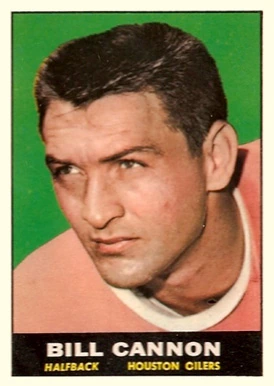
There are at least three notable public figures named Billy Cannon, so a quick disambiguation saves a lot of confusion. The one most people are searching for is William Abb Cannon Sr., the LSU Heisman Trophy winner born August 2, 1937, in Philadelphia, Mississippi, who played professional football in the AFL and NFL from 1960 onward and blank" rel="noopener noreferrer">died May 20, 2018, at age 80. NFL.com provides blank" rel="noopener noreferrer">career-stat listings for Billy Cannon by season, which helps support the career timeline used in net-worth analyses. That is the Billy Cannon this article covers in full.
The second is Billy Cannon Jr. (William Abb Cannon Jr.), born October 8, 1961, who is the son of the first and played linebacker for the Dallas Cowboys. He has his own separate career and financial profile. If you are instead comparing another sports-and-media figure, you may also want to check billy gillies net worth as a related adjacent consideration. The third is Ellis Cannon, a TV personality and publisher with a completely different background. If you are researching either of those two, you are in the wrong article.
What Net Worth Actually Means Here

Net worth is assets minus liabilities at a specific point in time. For a private individual like Billy Cannon was in his later years, that means adding up property, savings, investments, and any business interests, then subtracting debts, legal obligations, and other liabilities. The problem is that none of that information is publicly disclosed for most private people, including retired athletes. What you see on celebrity net worth websites is almost always an inference built from known salary eras, property records that occasionally surface in court documents or news coverage, and educated guesswork about endorsements and post-career income. That is why the Billy Cannon estimates you find online today range from $3 million to $5 million with no hard documentation behind either number.
The Most Credible Figures and What They Are Based On
Two widely cited figures appear across net worth aggregator sites: $3 million (published by NetWorthList) and $5 million (published by Celebrity Birthdays, which attributes the estimate to a generic analysis of Wikipedia, Forbes, and Business Insider data). A third source, CollegeNetWorth.com, is more honest and says exact figures are simply not publicly available, framing the estimate as an inference from three components: football salary earnings, his post-career dentistry income, and any endorsements. That is the most methodologically transparent framing, even if it does not produce a clean dollar figure.
The Sports Illustrated Vault provides the most concrete snapshot from Cannon's actual lifetime. A 1983 Sports Illustrated piece reported that friends at the time believed if Cannon had to pay off all his debts, he would be left with a net worth of roughly $2 to $3 million. That contemporaneous estimate included several documented property holdings: a 20-acre lot, a shopping center, a partial ownership stake in additional acreage, and a share of a Houston office building. This is not an audited balance sheet, but it is far more grounded than anything the modern aggregator sites offer.
| Source | Estimated Net Worth | Methodology Disclosed? | Date/Context |
|---|---|---|---|
| Sports Illustrated (1983) | $2–3 million | Yes — property holdings listed, debt-adjusted | 1983, pre-conviction era |
| NetWorthList | $3 million | No | Published online, undated methodology |
| Celebrity Birthdays | $5 million | Partial — generic aggregation cited | Published online, undated |
| CollegeNetWorth.com | Not quantified | Yes — components listed, no total given | Inferred from career + dentistry + endorsements |
Career Timeline and the Money Milestones That Matter
Billy Cannon's career-to-wealth story has three distinct financial chapters: the football years, the post-football professional career, and the counterfeiting conviction that created a serious liability event in the middle of it all.
The Football Years (1960 to roughly the late 1960s)
Cannon enrolled at LSU in the fall of 1956 and won the Heisman Trophy in 1959, which instantly made him one of the most coveted college players of his era. Because his family relationships are part of how his story is discussed online, some people also search for Billy Cannon’s heather ex husband net worth details billy gay heather ex husband net worth. The contract battle over his services was so intense it produced actual litigation. Houston Oilers owner Bud Adams offered Cannon $33,000 per year for three years plus a $10,000 signing bonus, which was serious money in 1960. The Los Angeles Rams also signed him, leading to the federal case known as Los Angeles Rams Football Club v. Cannon (185 F. Supp. 717, S.D. Cal. 1960). He ultimately played for the Houston Oilers in the AFL, then the Oakland Raiders (AFL), and ended his pro career with the Kansas City Chiefs in the NFL. By AFL and early-NFL era standards, his peak earnings were well above average but nowhere near modern NFL contract figures. Adjusted for inflation, $33,000 per year in 1960 is roughly equivalent to $350,000 to $400,000 today, which gives you a realistic sense of scale.
Dentistry and the Angola Years (1970s through 2018)
After retiring from football, Cannon trained as a dentist and established his own dental practice in Baton Rouge, Louisiana. This was a real, professional second career that generated legitimate income for years. In 1995, he was hired as a dentist at the Louisiana State Penitentiary at Angola, a role that ESPN's eTicket feature framed as a meaningful and somewhat redemptive chapter of his life. Working as a prison dentist at Angola is not a high-paying position, but it provided steady income and professional identity for Cannon well into his later years. This career arc is part of why CollegeNetWorth.com lists dentistry as a distinct income component in its estimate framework.
The Counterfeiting Conviction (1983)

This is the chapter that most disrupts any simple wealth narrative. In 1983, Cannon pleaded guilty to participating in a $6 million counterfeit money scheme. UPI reported at the time that he promised federal agents he would cooperate in convicting others. He served time at the Federal Correctional Institution in Texarkana. Legal fees, asset forfeitures, restitution, and the broader financial disruption of a federal conviction almost certainly reduced his net worth significantly from whatever it was in the early 1980s. The Sports Illustrated estimate of $2 to $3 million dates to around this period, which means that figure likely reflects a significantly diminished position compared to his peak property holdings before the legal troubles.
Post-Career Income and What We Can Infer
After serving his sentence, Cannon rebuilt a modest professional life through dentistry. There is no documented evidence of major business investments, real estate acquisitions, or endorsement deals in his post-conviction years. His Angola dentist role from 1995 onward was a steady but relatively modest public-sector type position. There is no publicly available record of book deals, speaking fees, or significant licensing arrangements tied to his Heisman legacy, though some former Heisman winners do generate income through autograph signings and memorabilia. None of that is documented for Cannon at a level that would materially change a net worth estimate.
Assets vs. Liabilities: What Can and Cannot Be Verified

The 1983 Sports Illustrated piece is the only contemporaneous source that actually lists specific asset categories for Cannon: a 20-acre lot, a shopping center, partial acreage ownership, and a Houston office building share. Those holdings, net of debts, put him at an estimated $2 to $3 million at that time. What happened to those assets after the counterfeiting conviction and legal proceedings is not publicly documented. It is reasonable to assume some assets were liquidated or forfeited, but the exact picture is unknown.
- Confirmed (historically documented): Real property holdings in the early 1980s including land, commercial real estate, and an office building share
- Confirmed: Professional income as a dentist from the 1970s through at least the mid-2010s
- Confirmed: Legal liability event in 1983 involving a $6 million counterfeiting scheme — financial impact on assets is not fully documented
- Not verifiable: Any retirement savings, investment accounts, or estate value at the time of his May 2018 death
- Not verifiable: Whether post-conviction asset sales or forfeitures eliminated the early-1980s real estate holdings
- Not verifiable: Endorsement or memorabilia income in his later years
How to Actually Evaluate the Net Worth Numbers You Find
If you want to assess how trustworthy any Billy Cannon net worth figure is, run it through a quick checklist. First, does the source disclose its methodology? The $3 million and $5 million figures floating around online do not. The CollegeNetWorth.com framing at least names its components. Second, does the figure correspond to a specific point in time? Net worth is not static, and a figure from 1983 means something very different from one at his 2018 death. Third, are any specific assets listed? The Sports Illustrated piece is the gold standard here because it names actual properties. Fourth, does the source account for known liability events, specifically the 1983 counterfeiting conviction? Any estimate that ignores that episode is incomplete.
- Check whether the site discloses how it calculated the figure — unsourced single numbers are almost always heuristic guesses
- Cross-reference the estimate against the 1983 Sports Illustrated $2 to $3 million baseline, which is the only documented contemporaneous figure with named assets
- Account for the 1983 federal conviction as a major downward liability event — any estimate that ignores it is missing a key input
- Compare at least two or three sources and look for the range, not just a single number — the $3 million to $5 million spread tells you the true confidence interval is wide
- Check Pro-Football-Reference and NFL.com for career timeline facts (these are reliable for dates and team history), then use those to anchor the earnings-era discussion
- If you need a 'net worth at death' figure for research purposes, the most defensible position is to cite the range ($3 million to $5 million) and note it is unverified, rather than presenting one number as fact
For context, if you are comparing Billy Cannon's financial profile to other athletes of the same era or to other notable Billys in sports and entertainment, the scale is modest by today's standards but meaningful for a 1960s AFL player who parlayed a Heisman into a second professional career. The financial profiles of athletes from that era rarely reach the multi-tens-of-millions range that modern contract structures generate, so a $3 to $5 million estimate is plausible as a lifetime accumulation figure, even accounting for the legal disruption.
Billy Cannon's story is also a reminder that net worth is a snapshot, not a verdict on a person's whole career. He earned real money in football at a time when AFL contracts were competitive, built a second career in dentistry that lasted decades, faced a serious financial and legal setback in 1983, and rebuilt a professional life afterward. The numbers that circulate online today reflect that complicated arc imperfectly. The honest answer is that the best-documented estimate puts him at $2 to $3 million in the early 1980s, and modern sites extrapolate that to $3 to $5 million by the time of his death in 2018, without the kind of primary data that would let anyone verify that trajectory with confidence. If you are also comparing other athletes' or public figures' fortunes, you may want to look at the Billy Galletti net worth discussion for a similar example of how estimates are framed. Because there is no audited figure available, searches for Billy Gay Utah net worth often lead to the same inference-based range discussed here for Billy Cannon.
FAQ
Why do different websites give different Billy Cannon net worth amounts?
Most “Billy Cannon net worth” numbers you see online do not specify whether they mean net worth at death (2018) or a mid-career snapshot. A quick way to avoid mixing time periods is to check whether the estimate references the 1983 counterfeiting era or the 2018 death date, since those two points imply very different wealth states.
Can I reliably adjust the 1983 estimate to estimate his net worth at death?
Yes, but the meaningful caveat is that the inflation adjustment only works for broad comparisons. For Cannon, the contemporaneous Sports Illustrated snapshot used specific asset categories around the early 1980s, so you can roughly scale that era’s purchasing power, but you cannot safely “project” exact 1983 assets forward to 2018 without knowing what was sold, forfeited, or repaid.
How can I be sure the Billy Cannon in my search is the right one?
A simple but common mistake is to assume every “Billy Cannon” search result is the same person. William Abb Cannon Sr. is the LSU Heisman winner covered here, while Billy Cannon Jr. (Cowboys linebacker) has a separate financial profile and should not be combined in any net worth calculation.
What information is usually missing that prevents an audited Billy Cannon net worth figure?
Because he was a private individual, missing information is the norm: tax filings, full asset lists, and settlement outcomes are not publicly available. In practice, the most defensible approach is to trust estimates only when they (1) name a time period and (2) identify particular assets or income components, which is why the asset-category detail from the early 1980s is more informative than generic ranges.
How does the 1983 counterfeiting case affect net worth estimates?
If an estimate ignores known liabilities, it can overstate wealth. In Cannon’s case, the 1983 federal conviction likely triggered restitution, legal fees, and asset forfeiture risk, so any figure that treats his net worth as if the conviction never happened is incomplete, even if the dollar amount looks reasonable.
Why is it hard to estimate his post-football income and assets accurately?
Expect the range to be wider than for public celebrities because dentistry income and prison dentistry roles are not typically tracked like professional sports contracts or public executive compensation. Another practical reason is that even if you know his likely earnings, you still do not know the size and timing of debts, the market value of his properties at sale, or whether any later assets were liquidated.
If I want to estimate it myself, what method should I use without overclaiming?
If you are building your own rough model, treat football earnings as the starting point, then add dentistry income for the decades after retirement, and finally subtract a liability buffer for the conviction period. The buffer can be large because the article explains there were multiple financial impacts, but the exact magnitude is undocumented, so your output should remain a range, not a single number.
Should I assume he earned extra money from his Heisman fame after football?
Net worth estimates are often based on partial property records and guesswork about other income streams like endorsements or speaking. For Cannon, the article notes there is no documented evidence of major post-conviction windfalls such as significant book deals or large licensing arrangements that would materially shift wealth upward, so you should downweight “extra income” claims unless they are tied to specific, verifiable events.